The U.S. government rates language skill on 11 levels.
A resume usually squeezes it into one word, like “fluent,” and hopes the recruiter reads it the same way.
That one word has to carry a lot.
So here are 7 steps to list the levels of language proficiency on a resume. You’ll also get the 3 formal scales recruiters know and copy-ready lines for every level.
- Best for: anyone adding a second language to a resume or LinkedIn profile. Skip it if the job ad gives you an exact format to follow.
- Cost: Free, unless you decide to take a test.
- Time: Same day.
- First step: Open the job ad and search it for “language,” “bilingual” and “fluent.”
How to List Language Proficiency Levels on a Resume Step by Step
Listing language proficiency levels on a resume takes 7 steps: choose languages, rate each skill, pick a scale, write a text line, add proof, place it and match LinkedIn.
Each step takes a few minutes, and the order matters, because your scale decides how every line reads.
Step 1: Decide Which Languages Belong on Your Resume
Put every language you could use at work on your resume, plus your native language.
That includes a language you’re still learning, as long as the job could use it and you label it honestly.
So can you put a language on your resume if you’re not fluent?
Yes. A front-desk job in a Spanish-speaking neighborhood, for example, gains from “Spanish: Conversational,” even if you couldn’t write a report in it.
But leave off a language you studied years ago and can’t use now.
If a recruiter calls and switches languages, a line you can’t back up costs you more than an empty space would.
Step 2: Rate Each Skill on Its Own
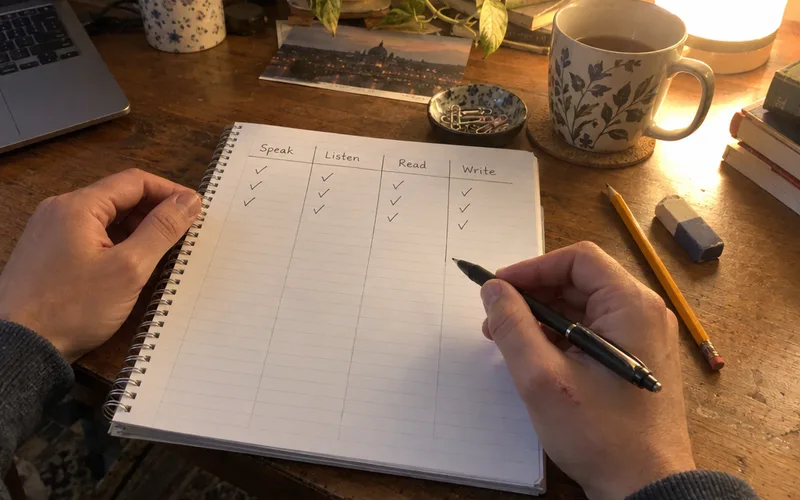
Rate speaking, listening, reading and writing separately before you choose one label.
They rarely match.
For example, someone who grew up speaking Korean at home may chat easily but struggle to write an email in it.
If your skills split like that, say so on the resume: “Korean: fluent speaking, basic writing” is clearer than one label that is wrong for half the job.
What if you’re between two levels?
The ILR scale, the one U.S. government agencies use, has a name for that. The Interagency Language Roundtable gives a “plus” level, such as 2+, when your skill goes well past one level but falls short of the next.
A quick self-check helps here.
Write down 3 work tasks you could do tomorrow in the language, like chatting with a customer, reading a contract or running a meeting. Then rate yourself on the hardest one you can really handle.
Step 3: Pick One Scale and Stick With It
Pick one scale for every language on your resume, because a recruiter can’t compare “Fluent” on one line with “B2” on the next.
You have 4 choices: plain labels, the ILR scale, the CEFR or ACTFL.
The CEFR is the Common European Framework of Reference for Languages, used across Europe. ACTFL is the scale from the American Council on the Teaching of Foreign Languages, common in U.S. schools.
Here’s how to choose based on the job you want:
| Your situation | Scale to use | Example line |
|---|---|---|
| Most U.S. private-sector jobs | Plain labels | Spanish: Fluent |
| U.S. federal, military or contractor jobs | ILR | Arabic: Professional working proficiency |
| International or European employers | CEFR | French: C1 |
| You hold a CEFR-rated certificate | CEFR plus test | Spanish: B2 (DELE B2) |
| The employer or school asks for ACTFL | ACTFL | Japanese: Intermediate High |
The table covers most cases, but the job ad always wins.
If the ad asks for “professional working proficiency” or “B2 German,” use those exact words. That way a recruiter and an applicant tracking system both find them.
Step 4: Write Each Language as a Plain Text Line
Write each language as a short text line, Language: Level, with an optional note in parentheses.
Here’s the basic format:
- Spanish: Native
- French: Professional working proficiency
- German: B1 (self-assessed)
Skip bars, stars, circles and dots.
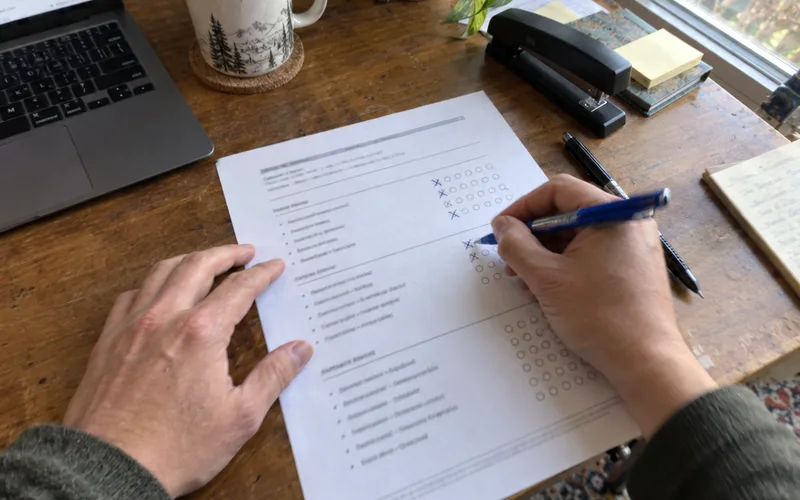
A recruiter writing on LinkedIn says they’ve seen many resumes with graphics for language skills. The recruiter’s question is simple: what do two dots mean?
A graphic tells the reader nothing, and an applicant tracking system may not read it at all.
So list your strongest language first, then the rest in order, all in text.
Step 5: Back Up the Level With Proof
Add proof next to any level that matters for the job: a test score, a certificate or one line about how you’ve used the language.
Proof turns a claim into a fact.
Tests such as the TOEFL or IELTS for English, the DELE for Spanish and the DELF for French each report a level a recruiter can check. If you’re not sure which exam fits your goal, start with this rundown of language proficiency tests.
Some scores need translating before they make sense on a resume.
An IELTS band, for instance, means more once you show the CEFR level it matches. And many U.S. students list results from the STAMP test for Spanish.
There’s one catch with the ILR scale.
Under the ILR’s own rules, a skill level is assigned through an authorized language examination. So don’t write “ILR 3” unless a test gave you that number.
Write “Professional working proficiency” instead. It names the level without claiming a score.
No test? Use real use as your proof: “Spanish: Fluent, handled Spanish-language customer calls daily.”
A course completion certificate is weaker proof than a test score.
It shows you finished lessons, not the level you reached, so list it under Education or Training rather than next to your level.
Step 6: Put Your Languages Where the Recruiter Looks
Put languages in their own Languages section near the bottom of your resume, or inside your Skills section, unless the job requires a language.
When it does, move the language up.
Name it in your summary at the top, list it in Skills, and show it in action in a work bullet, such as “Translated patient forms from English to Vietnamese.”
Interpreter and translator jobs may go one step further and ask for a formal result from a language test for interpreters.
Students have one more option.
If you earned the Seal of Biliteracy, list it under honors with the language and the year. Then add your level next to the language itself.
Step 7: Match LinkedIn and Get Ready to Prove It
Use the same level words on LinkedIn that you use on your resume, because recruiters often check both.
LinkedIn gives you 5 levels to pick from: Elementary, Limited working, Professional working, Full professional, and Native or bilingual.
Those labels line up with the ILR scale, so if your resume uses them, your profile can copy them word for word.
Then get ready for the interview.
If you write “Fluent,” expect a question in that language, and practice a 2-minute answer about your last job before the call.

In other words, write the level you’d be happy to prove on the spot.
What Are the Levels of Language Proficiency for a Resume?
Most resumes use 5 plain levels of language proficiency: Native or bilingual, Fluent, Proficient, Conversational and Elementary.
Here’s what each one tells a recruiter:
- Native or bilingual: you grew up with the language or use it like someone who did.
- Fluent: you work in the language with little effort, including fast speech and complex topics.
- Proficient: you handle most work tasks well, with occasional mistakes.
- Conversational: you manage everyday talk, but work tasks stretch you.
- Elementary: you know basic phrases and simple questions.
You can cut this to 4 levels by dropping Proficient, as long as every language uses the same set.
These plain labels are easy to read, but they’re loose.
That’s why formal language proficiency levels, such as ILR, CEFR and ACTFL, give each step a fixed meaning that employers can check.
ILR Levels 0 to 5 on a Resume
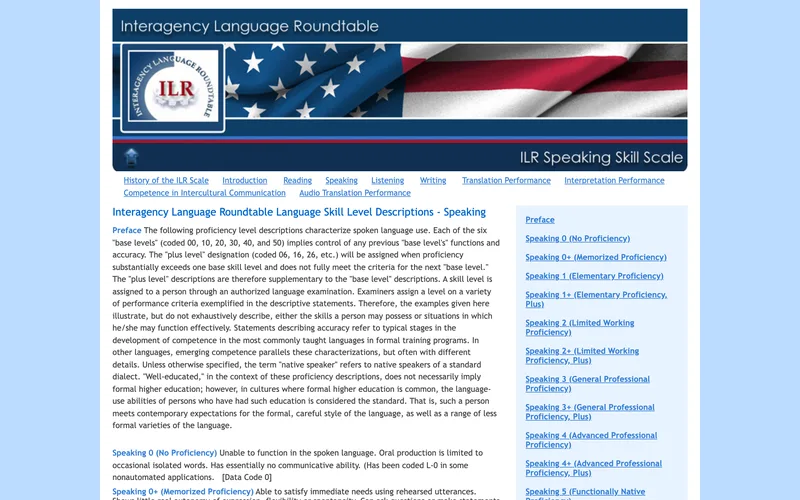
The ILR scale rates language ability from 0, No Proficiency, to 5, Functionally Native Proficiency, and U.S. government jobs and LinkedIn both use its labels.
The Interagency Language Roundtable’s descriptions define 6 base levels, coded 0 to 5, and each one includes everything the levels below it can do.
Here’s how each level reads on a resume:
| ILR level | Official name | Resume wording |
|---|---|---|
| 0 | No Proficiency | Leave it off |
| 1 | Elementary Proficiency | Elementary |
| 2 | Limited Working Proficiency | Limited working proficiency |
| 3 | General Professional Proficiency | Professional working proficiency |
| 4 | Advanced Professional Proficiency | Full professional proficiency |
| 5 | Functionally Native Proficiency | Native or bilingual proficiency |
Level 3 is the one most job ads mean when they say “professional.”
At that level, the ILR says a speaker can handle normal professional duties like conducting meetings and delivering briefings in the language.
So what is proficiency level 4?
Level 4 is Advanced Professional Proficiency, one step below native. LinkedIn calls it Full professional proficiency.
If you can run a meeting in the language but still search for words in a negotiation, you’re at 3, not 4.
CEFR Levels (A1 to C2) on a Resume
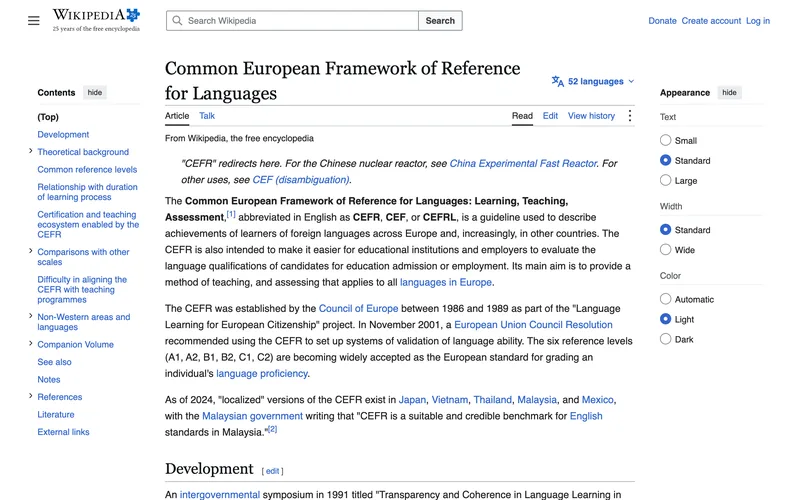
CEFR levels run in 6 steps from A1 to C2, in 3 pairs: basic user (A1, A2), independent user (B1, B2) and proficient user (C1, C2). CEFR levels suit a U.S. resume when you hold a CEFR-rated certificate or apply abroad.
Many language exams report a CEFR level, which makes it easy to write and easy to check.
So is English proficiency C1 or C2?
It can be either: both are proficient-user levels, and C2 is the top of the scale, so write whichever one your certificate shows.
The CEFR also works without a certificate, as long as you rate yourself honestly. Spanish learners, for instance, can check what each band covers in this breakdown of CEFR levels for Spanish.
What if you have an official CEFR level and you’re tempted to write “Fluent” instead?
Keep the level.
“French: C1 (DELF C1)” tells a recruiter more than “French: Fluent,” and you can add a plain word after it, such as “French: C1, advanced,” if the employer may not know the scale.
ACTFL Levels and When Employers Ask for Them
ACTFL levels run Novice, Intermediate, Advanced, Superior and Distinguished, and you’ll mostly see them in U.S. schools and language programs.
Novice, Intermediate and Advanced are each split into Low, Mid and High.
That gives lines like “Japanese: Intermediate High (ACTFL),” which reads clearly to a school district or language program that uses the scale.
Use ACTFL only when the employer names it, or when your proof is an ACTFL-rated test.
For most other jobs, a plain label or ILR wording reads faster.
Fluent vs Proficient vs Conversational: What Each Word Tells a Recruiter
Fluent means you work in the language with ease, proficient means you handle most work tasks with some mistakes, and conversational means everyday talk only.
The line between conversational and proficient is where most resumes get it wrong.
The ILR says Limited Working Proficiency can meet routine social demands and limited work requirements. That’s a good picture of “conversational.”
That’s useful, but it isn’t professional.
“Fluent” sets the highest bar of the 3.
Before you use it, check yourself against a clear test of what counts as fluent, and pick “Proficient” if you still need to slow people down.
The safe rule: choose the lower word when you’re torn between two.
Resume Language Examples for Every Level
Resume language examples work best as one line per language: the language, one level and, when you have it, proof or context.
Here are lines you can adapt:
- Native: English: Native
- Fluent with proof: Spanish: Fluent (DELE C1)
- ILR wording: Portuguese: Professional working proficiency
- CEFR: German: B2
- Conversational: French: Conversational (B1)
- Elementary: Japanese: Elementary, reads hiragana and katakana
- Split skills: Korean: Fluent speaking, basic reading and writing
For a job that needs the language, add a work bullet that shows it, such as “Answered Spanish-language customer calls” or “Wrote product emails in French.”
That one bullet does more than any label, because it shows the skill instead of naming it.
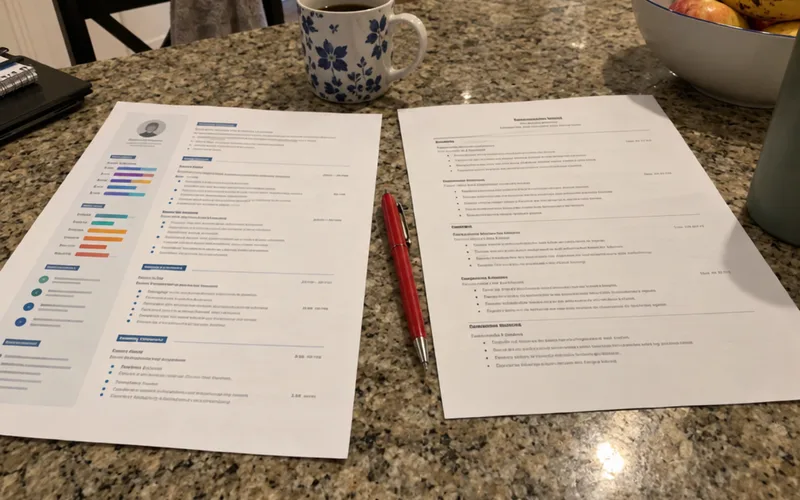
Here’s what a full Languages section looks like for a made-up candidate applying to a U.S. bank branch:
- English: Native
- Spanish: Professional working proficiency (DELE B2)
- Portuguese: Elementary
Notice the order: strongest first, one scale for every line and proof only where it exists.
For the same job, the summary at the top might add one line: “Bilingual banker who serves customers in English and Spanish.”
Language Proficiency Levels on Job Applications
Language proficiency levels on job applications usually come as a dropdown, such as Beginner, Intermediate, Advanced and Native, and you should pick the option that matches the label on your resume.
A mismatch looks careless.
If your resume says “Professional working proficiency” and the form only offers 4 choices, Advanced is the closest fit. Conversational usually maps to Intermediate, and Elementary maps to Beginner.
Some forms ask about each skill.
That’s where your Step 2 ratings pay off: answer speaking, reading and writing separately, even if they land on different levels.
Job ads use their own wording too.
“Bilingual preferred” means the language helps but isn’t required, so a Conversational line is still worth listing. “Fluent required” means you’ll likely be tested, so list it only if you’d pass a call in that language.
Here’s a script for a recruiter screen, when the ad lists a language you speak at a middle level: “My Spanish is conversational. I handle everyday customer questions, and I’m working toward professional level.”
An honest middle level, said with a clear example, beats an inflated label you can’t hold.
Common Mistakes When Listing Language Levels
The most common mistakes are claiming a level you can’t prove, mixing scales, calling a learned language “native” and listing a language you’ve lost.
Here’s what to watch for:
- Overrating: writing “Fluent” when you’re conversational. An interviewer who switches languages will find out in minutes.
- Mixing scales: “Fluent” on one line and “A2” on the next. Pick one scale, as Step 3 explains.
- Misusing “native”: native means you grew up with the language. If you learned it later, use Fluent or Full professional proficiency instead.
- Old languages: a language from 10 years ago that you can’t use now.
- Graphics: bars and dots, which Step 4 covers.
Heritage speakers face a harder version of the “native” question. The gap between a heritage speaker and a native speaker decides which label is honest.
Fix these 5, and your Languages line will hold up from the first screen to the last interview.
Frequently Asked Questions
How should I list my language proficiency levels on my resume?
List each language with one level in plain text, such as Spanish: Fluent or French: B2, in a Languages or Skills section. Put your strongest language first and add a test score or a short example of real use when you have one.
What is proficiency level 4?
Proficiency level 4 on the ILR scale is Advanced Professional Proficiency, one step below level 5, Functionally Native Proficiency. On LinkedIn, the matching label is Full professional proficiency.
Is English proficiency C1 or C2?
English proficiency can be either C1 or C2, because both are the top band of the CEFR, the proficient user levels. C1 is advanced and C2 is the highest level, so write the one your test certificate shows.
Can I put a language on my resume if I'm not fluent?
Yes, you can put a language on your resume if you’re not fluent, as long as you label it honestly as Elementary, Limited working or Conversational. List it when the job could use it, and leave it off when you can’t hold even a short conversation.
How do you describe your level of language proficiency?
You describe your level of language proficiency with one label from a recognized scale, such as Conversational, Professional working proficiency or B2. Back it up with what you can do, like running client calls or reading contracts in that language.
What are the 6 language proficiency levels?
The 6 language proficiency levels most people mean are the CEFR levels A1, A2, B1, B2, C1 and C2, from beginner to near-native. The ILR scale also has 6 base levels, numbered 0 to 5.
What language levels does LinkedIn use?
LinkedIn uses 5 language levels: Elementary, Limited working, Professional working, Full professional, and Native or bilingual proficiency. Use the same level words on your resume so the two never disagree.
Final Thoughts
One honest label per language, on one scale, in plain text, beats any graphic.
Open the job ad you want most this week, then rewrite your Languages line to match its wording.