Maybe you heard someone call German “Deutsch” and figured Dutch must be the same thing. Or you’re picking a language and hoping one gets you the other for free.
In this guide, you’ll get a straight answer, the family history in plain English and the differences you’d hit as a learner.
Let’s dive right in.
Is Dutch a German Language? The Short Answer
No. Dutch is its own language, with its own grammar, spelling rules and standard form.
Both languages belong to the West Germanic languages, the same branch as English. So Dutch and German are close relatives, but Dutch is German’s sibling, not its child or its dialect.
Quick Picker: Jump to What You Need
Short on time? Start here:
- Confused by the names? Read the next section on Dutch, Deutsch and Pennsylvania Dutch.
- Want the family tree? Go to where Dutch comes from.
- Already speak German? Skip to whether German speakers understand Dutch.
- Choosing a language? Jump to the last section.
Why People Mix Up Dutch and German
The confusion starts with the names. The German word for German is Deutsch, which sounds almost exactly like “Dutch,” and the two words share the same old Germanic origin.
What About Pennsylvania Dutch?
Here’s where US readers get tripped up. The Amish don’t speak the language of the Netherlands.
Pennsylvania Dutch is a German dialect, and its name comes from Deitsch, the speakers’ own word for German. So “Pennsylvania Dutch” really means “Pennsylvania German.”
Where Dutch Comes From
To see why Dutch isn’t German, take one quick look at the family tree. The Germanic languages split into three branches, and Dutch and German ended up on the same one.
The Three Branches of Germanic
Here’s the simple version:
- North Germanic: Swedish, Danish, Norwegian and Icelandic.
- West Germanic: English, German, Dutch, Frisian and Afrikaans.
- East Germanic: Gothic and its relatives, now extinct languages.
So English, Dutch and German are cousins in the West branch, and the full language family tree shows where every branch leads.
From Old Dutch to Modern Dutch
Dutch grew out of the speech of the Franks in the Low Countries. Linguists call these dialects Low Franconian, a separate line from the dialects that became Standard German.
Old Dutch began taking shape around 450 AD and lasted until about 1150. Middle Dutch followed for roughly 500 years, and Modern Dutch has been in use since about 1500.
German went down its own path at the same time. Neither language grew out of the other.
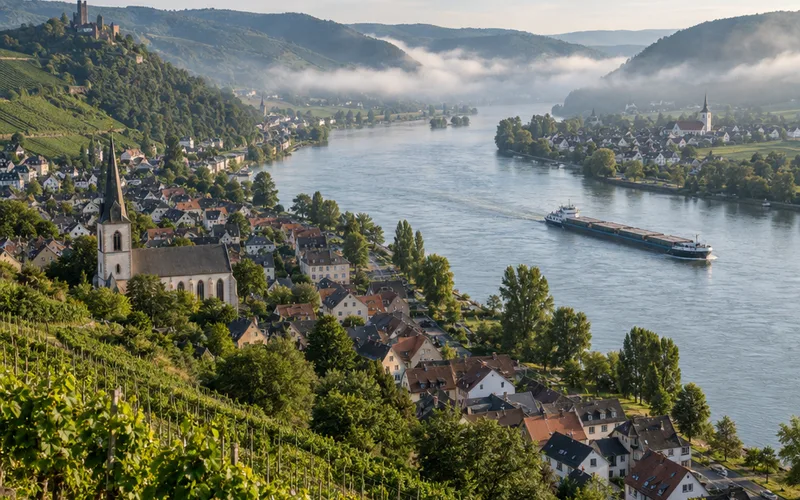
There’s a twist, though: local dialects along the Rhine shade into each other from village to village. Linguists call this a dialect continuum, known here as the Rhenish Fan, with Dutch at one end and German at the other.
So the line between a dialect and a language is partly about borders, not just sounds. The Dutch language and German each got their own standard language, schools and dictionaries.
How Dutch and German Differ
On paper, the two look close. Once you start learning, though, the differences show up fast in three areas.
Pronunciation
Pronunciation is the biggest barrier. In Dutch, the letter g is a throaty sound like the “ch” in Scottish “loch,” while German g sounds like the g in “go.”
Dutch also has its own vowels and diphthongs. For example, Dutch ui is close to “oy,” and Dutch oe sounds like the “oo” in “boot.”
Grammar
Grammar is where Dutch gets easier. Standard German keeps four grammatical cases, so articles and adjectives change depending on their role in the sentence.
Dutch dropped that case system. You mostly choose between two articles, de and het, and you don’t have to change them for case.
Gender is simpler too. German has three genders, masculine, feminine and neuter, while most Dutch speakers in the Netherlands use two groups for nouns: common and neuter.
Plurals follow the same pattern. Dutch nouns usually take -en or -s, while German plurals are irregular and take more memorizing.
Spelling and Writing
German capitalizes every noun, so a German page looks very different from a Dutch one. Dutch mostly capitalizes like English does.
The dots over vowels work differently too. In German, umlauts like ä, ö and ü change a vowel’s sound, but the Dutch trema in poëzie just shows that two vowels belong to separate syllables.
What Dutch and German Have in Common
The good news? Shared roots mean many everyday words look alike, such as “yes,” which is ja in both.

The pattern behind many of those near-matches is the High German consonant shift. German changed some old consonant sounds, while Dutch and English mostly kept them.
Here’s an example:
- Dutch water, German Wasser, English “water”
- Dutch maken, German machen, English “make”
- Dutch appel, German Apfel, English “apple”
That’s why Dutch often looks like a bridge between English and German, and why it shows up on lists of the closest languages to English.
Word order is another shared trait. A main clause in Dutch uses Subject Verb Object order like English, but a subordinate clause moves the verb to the end, giving Subject Object Verb order.
German does the same thing. If you can put the verb last in German, that habit carries straight over to Dutch.
Can German Speakers Understand Dutch?
Only partly. A German speaker can often catch the topic of a Dutch conversation, but pronunciation makes full understanding hard.
Living next door helps a little. Many Dutch people learn German at school, and some Germans near the Dutch border speak basic Dutch.
Reading usually goes better than listening, because you can match words at your own pace. Here’s how to test your own level in about 20 minutes:
- Pick a Dutch show or video with Dutch subtitles. On Netflix, browse by language and choose Dutch.
- Watch five minutes with no subtitles at all and note how many sentences you could retell.
- Watch the same five minutes with Dutch subtitles on and count again.
If you catch far more with subtitles on, your German helps you read Dutch but not hear it. So spend your first weeks on listening, which you can build by learning from TV shows.
Where Dutch Is Spoken Today
Dutch, called Nederlands by its speakers, is the main language of the Netherlands and its schools. It’s also an official language in Belgium, where the local varieties are often called Flemish.
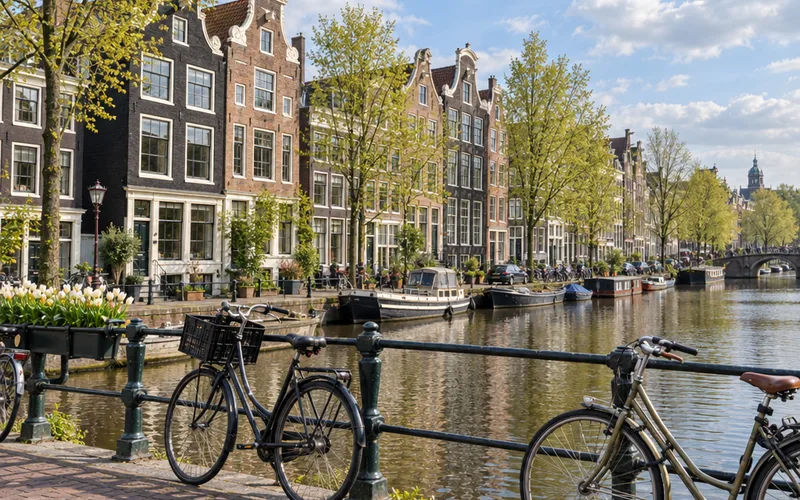
Dutch is official in Suriname in South America and in the Caribbean islands of Aruba, Curaçao and Sint Maarten.
Small Dutch-speaking minority communities also live in France, Germany, the United States and the United Kingdom.
Dutch also has a famous child language: Afrikaans, spoken mainly in South Africa. Dutch fed several creole languages too, though most of them are no longer spoken.
Dutch vs German: Which Should You Learn First?
Here’s the deal: pick the language you’ll actually use. Both are reachable for English speakers, but they pay off in different ways.
Pick Dutch if you plan to live, work or travel in the Netherlands or Belgium. With no case system and simpler plurals, it often appears among the easiest languages to learn.
Pick German if you want the bigger language. It’s spoken across Germany, Austria and Switzerland and has far more native speakers, so you get more media and courses.
Skip learning both at once if you’re a beginner. The shared words are easy to mix up, so finish the basics in one first.
Pro Tip: Learn every Dutch noun with its article, de or het, from day one.
Your first step today: open Duolingo, start the Dutch course and say the first lesson out loud. If German is still on your list, see what makes German grammar tough first.
The Bottom Line
Dutch isn’t German. It’s a separate West Germanic language next door, sharing words and word order but not sounds, cases or spelling.
This week, run the subtitle test on one Dutch video. If you’re still weighing options, start with choosing a language to learn.
Which one are you leaning toward: Dutch, German or both?
Frequently Asked Questions
Does the German language come from Dutch?
No. Neither language comes from the other: both grew out of older West Germanic dialects, so German and Dutch are siblings rather than parent and child.
Are Amish people German or Dutch?
Their roots are German-speaking. The Amish speak Pennsylvania Dutch, a German dialect whose name comes from Deitsch, the word for German, not from the Netherlands.
What are the three Germanic languages?
The Germanic family has three branches: North Germanic, like Swedish, West Germanic, like English, German and Dutch, and East Germanic, which is now extinct.
What are some basic Dutch phrases?
Start with hallo (hello), dank je wel (thank you), alsjeblieft (please) and tot ziens (goodbye). Practice them with Dutch audio, because the spelling hides sounds like the throaty g.
Is Dutch English?
No. English and Dutch are both West Germanic, so they share many words, but they are separate languages.