
Maybe you heard a coworker switch into Haitian Creole on a phone call. Or you saw “Creole” on a restaurant menu and wondered whether it means a language, a people or a cooking style.
In this guide, you’ll get a plain-English answer, how creoles form, and how to tell one from a pidgin or a dialect. You’ll also get real US examples, a quick test for any language, and first steps to learn one.
Let’s dive right in.
What Is a Creole Language?
So what is a creole language, exactly? It’s a natural language that grew out of contact between groups of people who didn’t share a language.
Creole languages usually start as a pidgin, a bare-bones contact language for basic communication. That contact language becomes a creole once children grow up speaking it as their first language.
That last part is the key to the definition. A creole has native speakers, while a pidgin doesn’t.
Once a whole community of kids uses a language every day, it fills out quickly, sometimes within a single generation. It gains the grammar, vocabulary and sounds people need to talk about anything, from jokes to science.
Creoles are also natural languages, which means nobody sat down and designed them. That sets them apart from constructed languages like Esperanto, which one person built on purpose.
Most creoles took much of their vocabulary from a European language, such as English, French, Spanish, Portuguese or Dutch. Their grammar, though, often looks very different from that source language.

Note: Linguists call the language that supplied the core lexicon the superstrate. The local or heritage languages that shaped the rest, often African languages, are called the substrate.
Quick Picker: Jump to What You Need
Not sure where to start? Use this quick picker:
- Need the basics? Read the next two sections on how creoles form and how they differ from pidgins.
- Heard creoles called “broken” French or English? Go to the dialect section.
- Want examples? Head to the examples table and the US section.
- Mixing up Creole people and Creole languages? Skip to the culture section.
- Want to learn one? Jump to the last section for first steps.
How a Creole Language Forms (Step by Step)
Every creole has its own history, but most follow the same rough path in three steps.
Step 1: People Need to Talk Without a Shared Language
It starts with language contact. Traders, workers or enslaved people from many language backgrounds end up in one place and need to understand each other.
Historically, that place was often a plantation, a port or an island colony. For centuries, colonialism and the slave trade threw speakers of many West African languages together with European colonizers.
Gullah is a clear case. It grew among enslaved West Africans and their descendants on the rice plantations of coastal South Carolina and Georgia.
Step 2: A Pidgin Fills the Gap
Next, people build a pidgin from the words of whichever language holds the most power there, often the colonizers’ language. Then they drop most of its grammar.
This simple code works for basic jobs like trading, giving orders and making deals. But it’s usually a second or third language, and nobody speaks it as a mother tongue.
Step 3: Children Turn It Into a Full Language
The big change comes with the next generation. Kids who hear it every day grow up speaking it as their first language, and they fill the gaps with new grammar.
Linguists call that process creolization. The result is a stable, complete natural language that can express anything its speakers need.

One caveat: some linguists question whether every creole really passed through a pidgin stage, so treat these steps as the common pattern, not a law.
Creole vs Pidgin: What’s the Difference?
The simplest test is native speakers. A pidgin is nobody’s first language, while a creole is the mother tongue of a whole community.
They also differ on four practical points, with the pidgin side first:
- Who speaks it: Adults, as an extra language, versus whole communities from birth.
- Grammar: Bare bones versus full rules for tense, plurals, questions and more.
- Vocabulary: A few tasks’ worth versus enough for daily life, school, music and media.
- Stability: Shifting from speaker to speaker versus settled rules that kids pass on.
Names can fool you, though. Hawaiian Pidgin and Tok Pisin both have that word in their names, yet both are creoles today because generations of children grew up speaking them.
Tok Pisin is now an official language of Papua New Guinea, used in government, media and daily life. It also serves as a lingua franca, a shared bridge language, across the many languages of Papua New Guinea.
So when you’re unsure, ask one question: do kids grow up speaking it at home? If yes, you’re almost certainly looking at a creole.
Is a Creole a Dialect or a Real Language?
A creole is a full language, not a dialect of the language it borrowed its words from. Haitian Creole isn’t “broken French,” and Jamaican Patois isn’t “bad English.”
Why does that myth stick around? Under colonialism, the colonizers’ language held the power, so creoles got labeled as wrong or simple versions of it.
That label was about status, not grammar.
Speakers of the source language usually can’t follow a creole without study. The grammar is different, and so is the phonology, or sound system.
Where people draw the line between language and dialect often depends on history and politics as much as on grammar. For creoles, though, linguists agree: they’re languages in their own right.
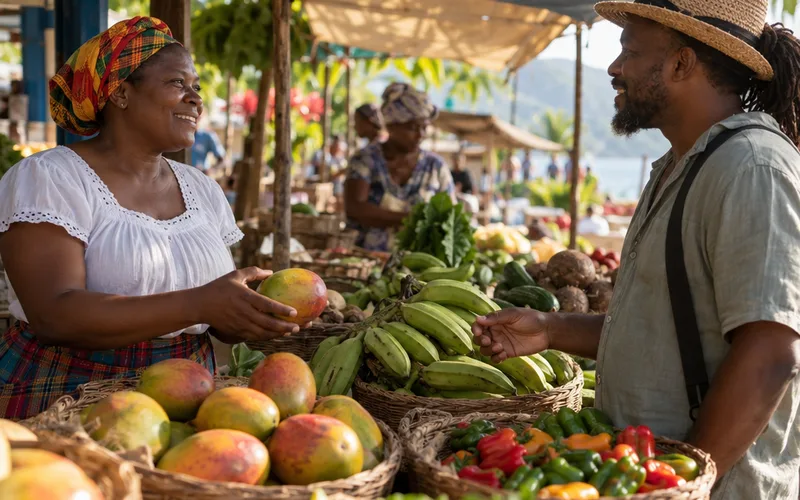
You’ll also hear the word patois. It originally meant a local, nonstandard way of speaking, and in Jamaica, it’s simply the everyday name for the local creole.
The takeaway: if you plan to learn a creole, treat it as its own language from day one, not as French or English with mistakes.
What Creole Grammar Actually Looks Like
Creoles aren’t simple, whatever you may have heard. They just organize grammar in a different way from most European languages.
For example, many creoles barely change the verb itself. Instead, they put a short marker word in front of the verb to show when or how something happens.
Haitian Creole works like this with the verb manje (to eat):
- Mwen manje means “I ate.”
- Mwen te manje means “I had eaten.”
- M ap manje means “I’m eating.”
French, by contrast, changes the verb itself: je mange, j’ai mangé, je mangeais. That’s a big reason a creole can’t be “just French with an accent.”
The best part? You learn a handful of markers once and reuse them with every verb.
In their syntax, many creoles keep a steady subject-verb-object word order and drop the gender endings found in French, Spanish or Portuguese. Haitian spelling is phonemic too, so words are written the way they sound.
Examples of Creole Languages Around the World
There are dozens of creoles, and many grew out of the African diaspora on islands and coasts tied to colonial trade. That’s why the Caribbean has so many.
This table lists some of the best-known ones, with the language that supplied most of their vocabulary:
| Creole | Main word source | Where it’s spoken |
|---|---|---|
| Haitian Creole | French | Haiti |
| Antillean Creole | French | Martinique, Guadeloupe, Saint Lucia |
| Jamaican Patois | English | Jamaica |
| Gullah | English | Coastal South Carolina, Georgia |
| Tok Pisin | English | Papua New Guinea |
| Papiamento | Spanish, Portuguese | Aruba, Bonaire, Curaçao |
| Cape Verdean Creole | Portuguese | Cape Verde |
| Chavacano | Spanish | Philippines |
| Mauritian Creole | French | Mauritius |
| Seychellois Creole | French | Seychelles |
| Hawaiian Pidgin | English | Hawaii |
| Bislama | English | Vanuatu |
Notice the pattern? Linguists group creoles by their main word source, so you’ll see labels like French-based creole language, Creole English and Portuguese-based creole languages.
That grouping helps you guess how much vocabulary you’ll recognize. If you know French, many words in Haiti’s creole will look familiar, even though the grammar won’t.
Haitian Creole
Haitian Creole, or Kreyòl, is an official language of Haiti alongside French. It takes most of its vocabulary from French, with grammar shaped by West African languages and a few words from the Indigenous Taíno.
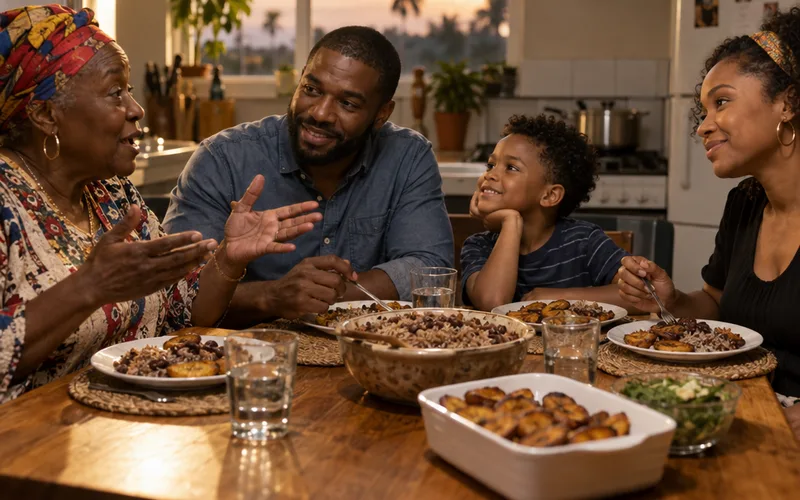
It’s also the creole most Americans are likely to hear, because the Haitian diaspora speaks it across the United States. If you want a creole with lots of media, music and speakers to practice with, it’s a strong first choice.
Jamaican Patois and Other English-Based Creoles
Jamaican Patois grew up while Jamaica was a British colony, mixing English words with grammar and vocabulary from West African languages. Other English-based creoles include Guyanese Creole in Guyana, the Bajan dialect in Barbados, Gullah and Tok Pisin.
You’ll hear it in reggae and dancehall songs, which makes it easy to start listening. Expect it to sound very different from standard English at full speed.
Papiamento
Papiamento, also spelled Papiamentu, is an official language on Aruba, Bonaire and Curaçao. It blends Spanish, Portuguese, Dutch and African languages, with some Arawak and English mixed in.
Its name is believed to come from the Portuguese word papear, meaning “to chat.” If you already speak Spanish, Papiamento and Chavacano, a Spanish-based creole in the Philippines, are two of the friendliest creoles to start with.
Creole Languages You Can Hear in the United States
You don’t need a passport to hear a creole. Four are spoken right here in the US:
- Haitian Creole: spoken in Haitian communities across the country.
- Louisiana Creole: a French-based creole, also called Kouri-Vini, with a small and aging group of speakers.
- Gullah: spoken on the Sea Islands and coast of South Carolina, Georgia and Florida.
- Hawaiian Pidgin: widely used in Hawaii for everyday, informal talk.
Louisiana Creole and Gullah are both endangered languages, with fewer fluent speakers each generation. You can read more about Louisiana’s own creole, including where it’s still spoken.
If you live near one of these communities, that’s your biggest advantage as a learner.
What Does “Creole” Mean for People and Culture?
The word Creole names more than languages. It also names peoples and cultures, which is why searches about it often mix the two.
The term goes back to the Spanish criollo. In colonial times, it meant a person of European descent born in the colonies, and over time different places used “Creole” for different mixed communities.
In Louisiana, Creole communities grew from people of African, European and Native American roots. That makes being Creole a matter of shared heritage, food, music and cultural identity.
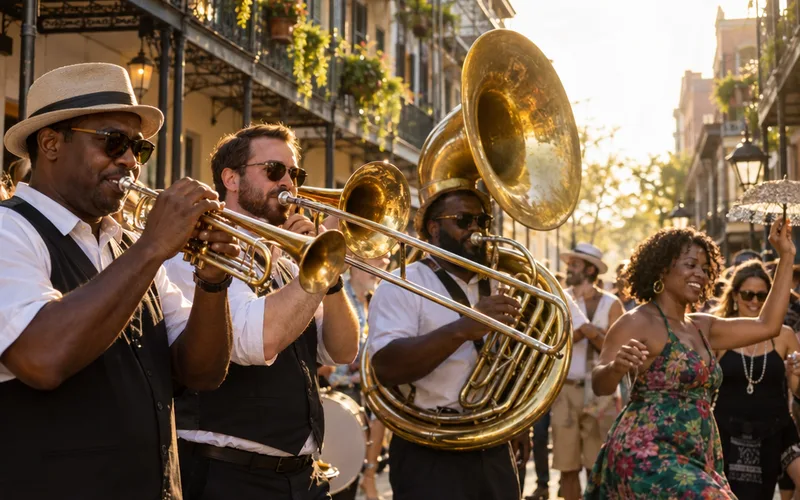
So is Creole the same as Black? Not exactly.
Many Creole people have African ancestry, but Creole describes a culture and heritage that people of several backgrounds share.
Creole vs Cajun
Cajuns descend from French-speaking Acadians whom the British forced out of Canada in the 1700s. Many of them settled in Louisiana.
Cajun French is generally treated as a variety of French, while Louisiana Creole is a separate creole language.
The two communities have mixed for centuries, so their food and music overlap a lot. When in doubt, ask people how they describe themselves.
Is English a Creole? 4 Borderline Cases
English isn’t a creole by most linguists’ standards, and neither is Swahili, while Afrikaans sits on the border. Here’s why each of the four common cases comes up:
- English: Most linguists say no. English borrowed heavily from French and Norse, and a few scholars have argued Middle English was creolized. But it never started as a trade language that kids then made native.
- Afrikaans: It grew from Dutch in South Africa and picked up words from Malay, Portuguese and African languages. Most linguists class it as a daughter language of Dutch, though some call it partly creolized.
- Swahili: It’s a Bantu language with many Arabic loanwords, not a creole. Heavy borrowing alone doesn’t make one.
- African American Vernacular English: It’s usually classed as a dialect of English, though some researchers link parts of its history to creoles like Gullah.
The lesson? Borrowing words is normal for every language.
A creole is defined by how it formed: through contact, a pidgin stage and new native speakers.

If you want to see how these languages connect, language family trees show which ones share a common ancestor. Creoles are tricky to place there, because they draw on more than one family at once.
How to Tell If a Language Is a Creole: A 4-Question Check
Want a fast way to sort any language you come across? Run these four questions:
- Did it form from contact between groups with no shared language?
- Do people speak it as their first language? If not, it’s probably a pidgin.
- Does it have its own grammar, different from the language that supplied its words?
- Can speakers of that source language follow it easily? If yes, it’s probably a dialect.
If you answer yes, yes, yes and no, you’re looking at a creole.
How to Start Learning a Creole Language
Learning a creole is very doable from home. This is the order I’d follow.
Pick the One You’ll Actually Use
Choose the creole spoken by people in your life. If your neighbors, coworkers or in-laws speak Kreyòl, start there.
If your family roots are in Louisiana, Jamaica or Cape Verde, home of Cape Verdean Creole, you’re learning a heritage language. Family members are your best teachers.
Still weighing several options? These steps for choosing a language to learn help you narrow it down.
Start With Listening
Next, build your ear before you open a grammar book. Creoles live mostly as a spoken language, in music and video, so that’s where your first hours should go.
Your first step today: search YouTube or your podcast app for the creole’s name plus “for beginners,” and save two channels. Then pick one song or show and replay a short clip daily, which is the same idea behind learning from TV and video.
Ask a Speaker for Help
The fastest progress comes from real speakers. Here’s what to say:
“I’d love to learn some Kreyòl. Could you teach me three things you say every day, and let me record you saying them?”

Swap in your creole’s name. People are usually happy to help with a small, specific ask.
Watch Out for the Biggest Catch
The catch? Learning materials for creoles are thinner than for French or Spanish, and it’s easy to stall when you can’t find a full course.
The fix: lean on native speakers and media, and treat any course as a backup.
Pro Tip: If you grew up hearing a creole at home but never spoke it, you may understand more than you think. The difference between a heritage speaker and a native speaker explains why your listening can run years ahead of your speaking.
The Bottom Line
A creole is a full language that grew from contact, passed through a simple contact-language stage and became the first language of a new generation. It’s not broken French or bad English.
Your first step this week: pick the creole spoken by someone in your life and find two beginner videos in it. Then ask that person to teach you three everyday phrases.
Which creole are you most curious about?
Frequently Asked Questions
Is there a language called Creole?
Not just one. Creole is a type of language with dozens of separate members, so search for the full name, like Haitian Creole or Louisiana Creole, when you look for lessons.
What are pidgin languages?
A pidgin is a simple contact language that adults build so they can trade or work together without a shared language. Nobody speaks it as a first language, and if children start growing up with it, it turns into a creole.
Which countries have patois spoken?
Jamaica is the best-known one, where Patois is the everyday name for Jamaican Creole. In Saint Lucia, Dominica, Grenada and Trinidad and Tobago, people also use the word patois for the local French-based creole.
What are you if you speak Creole?
You’re a speaker of that creole, the same way speaking French makes you a French speaker. Being Creole by heritage is a separate question about family and culture, so ask the community itself how it uses the word.
What is an example of a creole language?
Haitian Creole is the classic example: it takes most of its words from French but has its own grammar and native speakers. Jamaican Patois, Papiamento, Tok Pisin and Gullah are other good ones to look up.
Is English a creolized language?
Most linguists say no. English borrowed huge numbers of words, but it never went through the pidgin-to-native-language shift that defines a creole.