
Over 500,000 words and phrases fill the Oxford English Dictionary.
Yet English verbs barely change their endings, and English nouns have no gender at all.
That mix is why people argue over whether English is a hard language to learn. The answer changes with the skill you judge and the language you grew up with.
So I’ll split English into its easy and hard parts, show where it lands for 4 groups of native speakers, and end with habits that make the hard parts easier.
Is English One of the Hardest Languages to Learn?
English is not one of the hardest languages to learn for most people. English sits in the middle of the scale, with simple grammar but hard spelling and pronunciation.
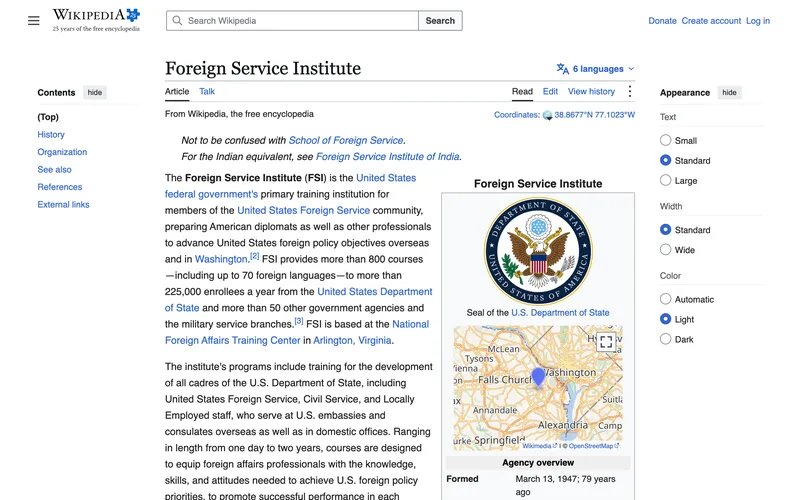
The best-known yardstick comes from the U.S. Foreign Service Institute (FSI), which trains American diplomats in foreign languages. It groups languages by the classroom hours a native English speaker needs to reach professional working proficiency.
An accredited English school in Florida sums up the scale. Lingua Language Center’s summary puts Spanish, French, Italian and Portuguese in Category I, at 600-750 hours.
Arabic, Mandarin, Cantonese, Japanese and Korean land in Category V, at 2,200 hours. That’s roughly 3 to 4 times as long.
Here’s the catch:
Those hours measure English speakers learning other languages. No official body publishes the reverse ranking for people learning English.
Still, the logic of language acquisition carries over. Linguistic distance from your native language decides most of the difficulty, not English itself.
Every language near the top of the hardest languages to learn earns its spot the same way: it sits far from the learner’s first language.
What Makes English Hard to Learn
English is hard to learn mainly because of its spelling, pronunciation, phrasal verbs, idioms and tenses. Each one is full of exceptions you have to memorize word by word.
Here are the 5 trouble spots, with an example of each:
Spelling That Doesn’t Match the Sound
English spelling often gives you no clear clue to how a word sounds.
For example, the letters “ough” sound different in though, through, tough, cough and thought.
Silent letters add another layer. The k in knife and the gh in thought are written but never spoken.
Spanish and Italian mostly sound the way they’re spelled, so English learners from those languages feel this one the most.
Pronunciation and Word Stress
English pronunciation trips up learners because one spelling can carry two sounds.
“Lead” rhymes with “read” in “lead the team” but with “red” in “a lead pipe.”
Stress can change meaning too. PERmit is a noun and perMIT is a verb, and the spelling doesn’t tell you which.
So you can read a word perfectly and still say it wrong.
Phrasal Verbs and Idioms
Phrasal verbs pair a verb with a small word like up, over or out. The pair often means something you can’t guess from its parts.
Take get: get up, get over, get by and get along all mean different things.
Idioms work the same way. “Once in a blue moon” means rarely, and “put it on the back burner” means delay it.
You don’t need them to be understood. But you do need them to follow movies and everyday communication.
12 Tense Forms to Choose From
English verb tenses are hard because each of the 3 basic tenses splits into 4 forms. That gives you 12 to choose from.

A Dear Duolingo column by linguist Stefanie Schantl explains that past, present and future each have 4 subtypes. Here’s the present:
- Simple present: I cook every day (a habit).
- Present progressive: I am cooking right now.
- Present perfect: I have cooked dinner already.
- Present perfect progressive: I have been cooking since this morning.
So you track more than when something happened. You also track its aspect: whether it’s ongoing, finished or still relevant.
Articles and Word Order
English articles (a, an, the) and strict word order are hardest for speakers of languages without articles.
Mandarin Chinese, Russian, Japanese and Korean have no articles. So choosing between “a” and “the” can stay hard even at advanced levels.
Word order, or syntax, is fixed too: English sticks to subject-verb-object order, more strictly than Greek. You say “a big red ball,” never “a red big ball.”
Prepositions pile on. You’re on a bus but in a car, and few patterns explain why.
Key Takeaway: Most hard parts of English come down to remembering exceptions, so hearing real English often helps more than learning more rules.
What Makes English Easy to Learn
English is easy to learn in its grammar. English nouns have no gender, verbs barely change, and you use the same “you” for everyone.
Here’s how that compares with other languages:
- No grammatical gender. A chair is just a chair. German gives a sweater, a jacket and a dress 3 different genders (der Pullover, die Jacke, das Kleid).
- Little verb conjugation. In the simple present, only he, she and it add an -s: I speak, she speaks. Irregular verbs like go and went are the main exception. Spanish gives almost every person its own ending.
- Almost no noun cases. “Book” stays “book” as the subject or the object; only pronouns like he and him change.
- No formality levels. You say “you” to a friend or a president, while Japanese and Spanish change forms.
- The Latin alphabet. If your language already uses it, you can start reading English words on day 1.
English is also the world’s lingua franca.
The same Duolingo column calls English the most commonly studied language by non-native speakers. That means courses, shows and practice partners are easy to find.

If English grammar were the only test, English would rank among the simplest languages of Europe.
How Hard Is English for Your Native Language?
English is easiest for German, Dutch and Scandinavian speakers and moderate for Spanish or French speakers. English is hardest for speakers of Mandarin Chinese, Japanese, Korean and Arabic.
The pattern runs like the FSI scale in reverse. The closer your first language sits to English, the shorter your path.
German, Dutch and Scandinavian Speakers
English is one of the easiest languages for German, Dutch, Norwegian, Swedish and Danish speakers. All of them are Germanic languages that share core vocabulary and word order with English.
That shared family is also why the closest language to English is a Germanic one.
Many of these English learners reach conversational English quickly. Their main hurdles are the spelling and sound quirks everyone faces.
Spanish, French, Italian and Portuguese Speakers
English is moderately hard for Spanish, French, Italian and Portuguese speakers. Shared Latin and French roots help with vocabulary, while sounds, spelling and phrasal verbs take the most work.
Cognates, words that share a root such as hospital and animal, give you a head start in reading.
Prepositions are a common snag. You wait for someone in English, but in Spanish you simply wait.
For Spanish speakers, the specific traps come down mostly to sounds and spelling.
Russian, Hindi, Turkish and Arabic Speakers
English is moderately to very hard for Russian, Hindi, Turkish and Arabic speakers. The grammar is often simpler than at home, but the sounds and words are new.

Russian changes noun endings through a full system of grammatical cases, so English’s near lack of cases feels like a break.
Arabic speakers also switch from a right-to-left script to the Latin alphabet. So reading and writing need their own practice time.
Mandarin Chinese, Japanese and Korean Speakers
English is hardest for Mandarin Chinese, Japanese and Korean speakers, because the writing systems, sounds and grammar all differ from their first language.
Mandarin is a tonal language, where pitch changes a word’s meaning. English uses pitch for emphasis and questions, so Mandarin speakers have to relearn what pitch is for.
Japanese and Korean put the verb at the end of a sentence. English puts it in the middle.
So which is harder, English or Chinese? For most learners, Chinese: the FSI puts Mandarin in its hardest group, and English has no characters to memorize.
If you speak Chinese and are weighing English against other options, compare the hardest languages for Chinese speakers first.
Is English a Germanic or Romance Language?
English is a Germanic language with a large share of Latin and French words. That mix is why both German and Spanish speakers recognize parts of it.
On a language family tree, English sits on the West Germanic branch next to Dutch and Frisian.
English grammar once had far more endings. Old English had 4 noun cases that later disappeared, the Duolingo column notes, so modern English words barely change form.
Later contact with French and Latin added thousands of words that share roots with Spanish, French and Italian. That’s why English feels half familiar to so many learners.
How Long Does It Take to Learn English?
Learning English has no official hour count. The Foreign Service Institute’s scale for the reverse direction, 600-750 classroom hours for close languages and 2,200 for distant ones, gives a rough range.
Treat that as a guide, not a promise. It counts hours of classroom education, and it was built for English speakers learning other languages.
Here’s an example:
Say a Portuguese speaker spends 1 hour a day learning English. At 700 hours, that’s almost 2 years.
At the high end of the scale, the same pace stretches past 6 years. So the hours you add each week are the biggest lever you control.
You can work out your own language learning timeline by dividing target hours by your hours per week.
How to Make the Hard Parts of English Easier
The hard parts of English get easier when you learn them through listening and context. Hear words while you read them, and learn phrasal verbs inside real sentences.
Here’s what I’d do:
- Read and listen together. Turn on English subtitles with English audio, so each spelling gets tied to its sound.
- Collect phrasal verbs in full sentences. Write down “she got over the flu,” not just “get over.”
- Shadow short lines. Pause a scene, repeat the line out loud and copy its stress.
- Draw tense timelines. Mark where each of the 4 forms sits on a line from past to future.
Easy listening you can mostly follow, called comprehensible input, covers 3 of these at once.
Adult second-language learners can follow a step-by-step English plan. For material at your level, try these resources for English learners.
Pro Tip: Rewatch one short scene 3 times: with native-language subtitles, then English subtitles, then none.
The Bottom Line on English Difficulty
English is easy to start and slow to bring to full fluency.
Its grammar gets you talking fast, while English spelling and sounds take the longest.
This week, pick one show you like and watch 1 episode with English subtitles on.
Frequently Asked Questions
What is harder, English or Spanish?
English and Spanish are hard in different ways: Spanish has more verb endings and two genders, while English has harder spelling and sounds. For English speakers, the Foreign Service Institute puts Spanish in its easiest group, at 600-750 classroom hours.
Which is harder, English or Chinese?
Chinese is harder than English for most learners, because Mandarin Chinese adds tones and thousands of characters. The Foreign Service Institute puts Mandarin in its hardest group for English speakers, at 2,200 classroom hours.
What is the #1 hardest language?
No single language is the #1 hardest, because difficulty depends on your native language. For English speakers, the Foreign Service Institute’s hardest group is Arabic, Mandarin, Cantonese, Japanese and Korean, at about 2,200 classroom hours each.
What is the no. 1 easiest language to learn?
The easiest languages for a native English speaker are in the Foreign Service Institute’s Category I, such as Spanish, French, Italian, Dutch and Swedish, at 600-750 classroom hours. Pick the one you’ll hear and use most.
What is the #1 most learned language?
English is the #1 most learned language: a 2026 Dear Duolingo column calls it the most commonly studied language by non-native speakers. It also calls English the most widely spoken language globally.