

You can spend weeks reading “best language” lists and still not start. Most of those lists rank languages by how many people speak them, not by how well they fit your life.
In this guide, I’ll show you how to answer “what language should I learn” in six steps, with a first move for each one. You’ll also get plain talk on difficulty, family languages and dialects, so you pick a language you’ll actually stick with.
Let’s get started.
What Language Should I Learn? Start Here
Use this quick picker to jump to the step that fits you:
- No idea at all? Start with Step #1 and write down your reason.
- Torn between two languages? Jump to Step #5 and test-drive both.
- Worried a language is too hard? Go to Step #3.
- Want to talk with family? Skip ahead to the section on family languages.
- Already chosen? Go straight to Step #6 and set your goal.
Step #1: Write Down Your Real Reason
Your reason matters more than any ranking, because it’s what gets you to practice on a tired Tuesday night. A language tied to real people or real plans beats one that only looks good on paper.
This step fits everyone, and it costs nothing but 15 minutes with a pen. You’ll use the answer in every step after this one.
Here’s how to do it:
- Finish this sentence in a notebook: “In one year, I want to use this language to…”
- Write at least three endings, such as “talk with my partner’s parents” or “watch anime without subtitles.”
- Circle the ending that involves a real person, a real trip or a real job.
- List every language that serves the circled ending.
Most reasons point somewhere specific. Family points to one language, work to what your coworkers speak, travel to your next trip and media to the shows you love.

Don’t overlook sign language, either. American Sign Language is a full language with its own grammar, and the sign language guides show how to begin.
Language schools treat it as a real choice, too. ABC Languages SF’s class listing, for example, offers ASL classes next to spoken languages such as Hindi and Vietnamese.
The catch: picking a language because it sounds impressive. If nobody in your life speaks it, move it down your list.
Step #2: Check Who You’ll Actually Talk To
Next, find out which languages are spoken around you. A language you can hear at work, at the store or in your family gives you free practice every single week.
This step fits anyone who wants to use the language at home in the US. Skip it if your goal is purely travel or media, and go to Step #4.
It’s free and takes about 10 minutes. Here’s how to get your own numbers:
- Go to data.census.gov and search “language spoken at home” plus your county name.
- Write down the top three languages other than English in your area.
- Search a job site such as Indeed for “bilingual” plus your city, and count which languages employers ask for.
- Star any language on that list you already hear each week.
Here’s an example. Say you’re a nurse, many of your patients speak Spanish, and local job ads ask for bilingual staff.
Spanish wins your shortlist, because you’ll use it at work every week. If Spanish tops your check too, the Spanish learning hub shows where to start.

The catch: treating local numbers as the whole story. A language with few speakers near you can still be the right pick if it’s the one your family or partner speaks.
Step #3: Match the Language to the Time You Have
Some languages take English speakers far longer than others. The Foreign Service Institute (FSI), which trains US diplomats, sorts languages into categories by how long its students take to reach working proficiency.
This step matters most if you have a deadline, such as a trip, a move or a job requirement. With no deadline and a strong reason, difficulty matters a lot less.
Here’s the short version. Close relatives of English, like Dutch and Norwegian, and languages with lots of shared Latin vocabulary, like Spanish, French and Italian, tend to come fastest.
Languages with new writing systems and fewer shared words take much longer. Japanese, Korean, Mandarin Chinese and Arabic sit in that group.
That gap comes down to language families, which trace how languages descend from common ancestors. English is a Germanic language with heavy French influence, so the closest languages to English share many of its words and sentence patterns.
Your first step today: write your top two languages next to the hours you can give each week. Then compare them using the language difficulty guides, or start with the quickest picks for English speakers if speed matters most.
The catch: using difficulty as an excuse to never start. If your reason points to Japanese, plan for a longer road instead of switching to an easier language you don’t care about.
Step #4: Pick a Language With Content You Already Love
Here’s a test most guides skip: can you find hours of shows, videos, podcasts or games you’d enjoy in this language? If you can, practice stops feeling like homework.
This fits anyone who learns from TV, film, music or YouTube. It’s free to check, and you’ll have your answer in one evening.

Here’s how to run the check:
- On Netflix, browse by language and look at the original-audio titles for each language on your shortlist.
- Search YouTube for “[language] for beginners” and “[language] vlog,” and note how many channels you’d really watch.
- Search your podcast app for a learner podcast in each language.
- Count the titles you’d watch or listen to for fun.
More titles means more free practice.
Say you love Korean dramas and you’ve already watched a dozen with English subtitles. Korean starts with a big advantage for you, because you already have a supply of input you enjoy.
Once you’ve picked, you can learn from TV shows by rewatching short scenes with subtitles in your new language.
The catch: choosing a language for one show. Make sure there’s enough content to keep you busy for a year, not a weekend.
Step #5: Test-Drive Your Top Two for Two Weeks
Still torn? Try both, because two weeks of short practice tells you more than any quiz can.
This fits anyone stuck between two or three options. It’s free with apps and YouTube, and you’ll have an answer in 14 days.
Here’s the plan:
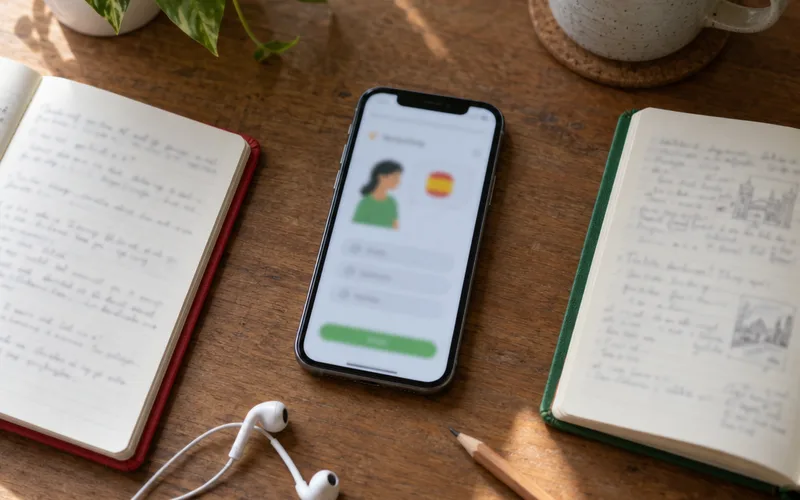
- Do 15 minutes a day in each language, using a free app like Duolingo plus one beginner YouTube video.
- After each session, write down which language you looked forward to.
- On day 14, keep the one you opened without forcing yourself.
Prefer a teacher to an app? ABC Languages SF, for example, sells online travel workshops as a crash course in eight languages, including Spanish, Arabic and Chinese.
What about quizzes? Online quizzes and pick-a-language wheels are fun, but they can’t know who you’ll talk to or how much time you have.
Use a quiz to add one language to your shortlist, then put it through this test drive. The same goes for Esperanto, a language built to be easy to learn, though whether it’s really the easiest option is a fair question.
The catch: testing three or more languages at once. Two is enough, and more just splits your attention.
Step #6: Commit and Set a Level Goal
Once you’ve chosen, commit for at least three months before you judge the choice. Then give yourself a goal you can measure.
The Common European Framework of Reference for Languages (CEFR) describes six levels, from A1 for beginners to C2 at the top. A target like “reach A2 by summer” is much easier to work toward than “get good.”
Your first step today: read the A1 and A2 descriptions in the proficiency levels guide, then write one goal with a date. From there, set up a daily study routine that fits your week.
The catch: switching languages every few weeks. When you feel the urge, reread your Step #1 reason before you change anything.
Popular Choices for English Speakers
Here’s how the most common picks line up for US learners, with who each one fits. The popular languages hub goes deeper on the most spoken languages and how to weigh popularity against your goals.
- Spanish: fits almost anyone in the US who wants local practice, work use or travel in Latin America.
- French: fits travel, culture and film lovers, and it shares many words with English.
- German: fits people headed to work or study in Germany, Austria or Switzerland.
- Japanese: fits anime, manga and game fans ready for a long project, and the Japanese learning hub covers its three writing systems.
- Mandarin Chinese: fits patient learners with business or family ties to China or Taiwan.
- Portuguese: fits Brazil fans, and it comes faster if you already know some Spanish.
- Korean: fits K-drama and K-pop fans, and its alphabet, Hangul, is a friendly first step.
Weighing usefulness instead? Start with which language is most useful for your goal.
From there, compare languages with a strong future, the top languages for business and how Spanish stacks up against Japanese.
One warning about popularity maps and lists: check where their numbers come from. A widely shared Wikimedia Commons map of German knowledge across EU countries states that no source has been provided for its data.
Reconnecting With a Family Language
If someone in your family speaks a language, start there. You may already understand more than you think, which gives you a big head start.
People who grew up hearing a language at home are often called heritage speakers. They often understand far more than they can say, and the heritage language guides cover programs built for that exact gap.

Knowing how a heritage speaker differs from a native speaker helps you pick a class level. Some schools run classes for exactly this, such as ABC Languages SF’s online pop-up class “Spanish for the Rusty Speaker.”
Here’s what to say to a relative:
“I want to get better at [language] so we can talk more. Could we spend 10 minutes speaking it every time we call, even when I make mistakes?”
The catch: feeling embarrassed by your gaps. Ask your family to correct just one thing per conversation, so practice stays fun instead of turning into a test.
Language or Dialect? Settle It Before You Start
Some languages come in versions that sound quite different. Spanish in Mexico and Spain, or Arabic in Egypt and Morocco, can differ in words and pronunciation, so pick the version you’ll actually hear.
Your first step: name the country or community from Step #2, then look for courses and shows from that place. The dialects guides explain where the line between a language and a dialect falls, and why that line is often political.
They also explain what a creole language is, which matters if your family speaks Haitian or Louisiana Creole.
Want to Learn More Than One?
Plenty of people want to speak several languages. Start with one, reach a comfortable level, then add the next.
The polyglot guides show how people juggle many languages, and you can check how many languages it takes to earn the title.
Long Shots Worth Knowing About
These options can be rewarding, but few readers have a reason to start them this month:
- Latin: great for word roots and classic texts, but you won’t hold everyday conversations, which is why people call it a dead language.
- Klingon and other invented languages: fun for fans, but the deal-breaker is a tiny community. Here’s whether Klingon counts as a real language.
Your First Step This Week
The right answer to “what language should I learn” is the one tied to your real reason and the people or shows in your life. Write down that reason tonight, then start a two-week test drive of your top two.
Which language is on your shortlist right now?