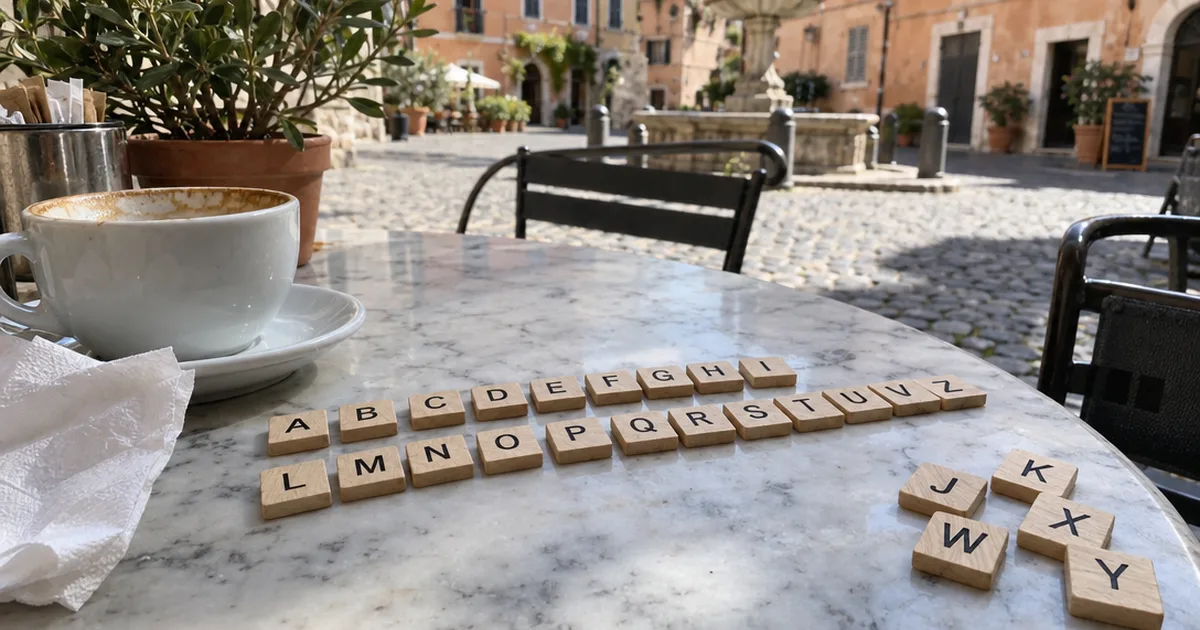
Italian gets by with 21 letters, 5 fewer than English.
Yet once you know them, you can read almost any Italian word out loud, even words you’ve never seen.
That’s because Italian is spelled the way it sounds. Learn the Italian language alphabet plus about 6 letter-pair rules, and the guesswork disappears.
Here’s the plain version, with a real Italian word for every rule.
How Many Letters Are in the Italian Alphabet?
The Italian alphabet has 21 letters: 5 vowels (A, E, I, O, U) and 16 consonants. It uses the same Latin letters as English, minus J, K, W, X and Y.
So if you can read this page, you already recognize every letter. The work is in the names and the sounds.
Here’s the full set in order: A, B, C, D, E, F, G, H, I, L, M, N, O, P, Q, R, S, T, U, V, Z.
Notice the jump from I straight to L, and from V straight to Z. That’s the whole set: 21 letters to learn, not 26.
The Italian Alphabet A to Z With Pronunciation
Each of the 21 letters in the Italian alphabet has its own Italian name, such as acca for H and zeta for Z, and most names are short words built from the letter’s sound. Here’s every letter with its name and a simple English sound-alike:
| Letter | Italian name | Say it like |
|---|---|---|
| A | a | ah |
| B | bi | bee |
| C | ci | chee |
| D | di | dee |
| E | e | eh |
| F | effe | EF-feh |
| G | gi | jee |
| H | acca | AHK-kah |
| I | i | ee |
| L | elle | EL-leh |
| M | emme | EM-meh |
| N | enne | EN-neh |
| O | o | oh |
| P | pi | pee |
| Q | cu | koo |
| R | erre | EHR-reh |
| S | esse | ES-seh |
| T | ti | tee |
| U | u | oo |
| V | vu or vi | voo or vee |
| Z | zeta | DZEH-tah |
See the pattern? Consonants that sound like a hiss or a hum (F, L, M, N, R, S) get a name with “e” on both sides, while most of the rest end in “i,” like bi, ci and di.
So learn the vowels first, then the “e” letters as one group. That leaves only a few odd ones out: H (acca), Q (cu), V (vu) and Z (zeta).
The 5 Italian Vowels and Their Sounds
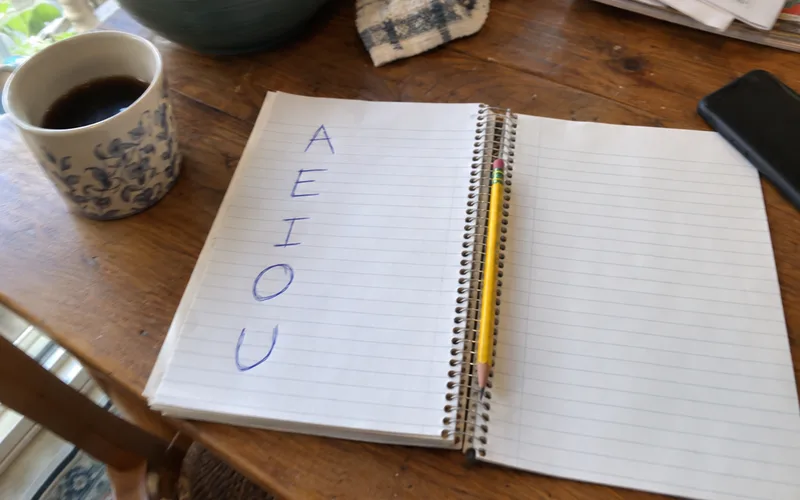
The Italian alphabet has 5 vowels, A, E, I, O and U, and each one keeps a short, clean sound wherever it appears. That’s the biggest difference from English vowels, which change from word to word.
Here’s how they sound:
- A like the “a” in father: casa (house)
- E like the “e” in bet or the “ay” in day, without the glide: bene (well)
- I like the “ee” in meet: vino (wine)
- O like the “o” in north or in boat, without the glide: sole (sun)
- U like the “oo” in moon: luna (moon)
E and O each have an open and a closed version, so Italian speech has 7 vowel sounds from 5 letters. Don’t stress about that at the start, since native speakers from different regions disagree on some words too.
What matters more is this: never let an Italian vowel slide into another sound.
Say “no” with an American accent and you get “noh-oo.” Say it the Italian way and it stops clean on the “o.”
J, K, W, X and Y: The 5 Borrowed Letters
J, K, W, X and Y aren’t part of the 21-letter Italian alphabet, but Italians still name and read them because they appear in foreign words, brands and names.
Each one has an Italian name:
- J: i lunga (long I)
- K: kappa
- W: doppia vu or vu doppio (double V)
- X: ics
- Y: ipsilon or i greca (Greek I)
You’ll see them on signs and menus in words like jeans, karaoke, weekend, taxi and yogurt.
Why are they missing? Native Italian words don’t need them, because other letters already cover their sounds.
The “k” sound is written with C or CH, the “w” sound with U (uomo, quattro), and the “ks” sound with S or SS (Alessandro). So when a word uses one of these 5 letters, you know it’s borrowed.
How Is the Italian Alphabet Different From English?
The Italian alphabet differs from English in 3 ways: it has 21 letters instead of 26, its letters have different names, and its spelling matches its sounds far more closely.
In English, “ough” sounds different in though, through and tough. In Italian, a letter combination sounds the same in nearly every word.
That predictability is one reason Italian shows up on lists of the easiest languages to learn for English speakers. If you’re still weighing your options, it helps to see which language fits your goals before you commit.
A few Italian sounds have no exact match in your mouth yet, though:
- R is tapped or rolled with the tip of your tongue, as in Roma.
- Z sounds like “ts” (pizza) or “dz” (zero), never like the “z” in zoo.
- Q always comes with U and sounds like “kw,” as in quattro (four).
If you’ve studied the Spanish alphabet A to Z or the French alphabet, you’ll spot a lot of overlap. Italian, Spanish and French all grew out of Latin and sit on the Romance branch of the Indo-European language family, but Italian has fewer letters than Spanish and no ñ.
When Do C and G Sound Hard or Soft?
In Italian, C and G are soft before the vowels E and I and hard before A, O and U, so cena starts with a “ch” sound and casa with a “k” sound. Soft G sounds like the “j” in jet, while hard G sounds like the “g” in go.
Here’s the rule in action:
- Hard C: casa (house), cuore (heart)
- Soft C: cena (dinner), ciao (hi or bye)
- Hard G: gatto (cat), gusto (taste)
- Soft G: gelato (ice cream), giro (turn)
But what if Italian needs a hard sound before E or I? That’s where H comes in.
Put an H between the letter and the vowel and the sound stays hard: che (what) says “keh,” chiesa (church) says “KYEH-zah,” and spaghetti says “spah-GET-tee.”

And when an I sits between C or G and another vowel, it usually just softens the letter without being heard on its own. That’s why ciao is “chow” and giorno (day) is “JOR-noh.”
Key Takeaway: E and I make C and G soft, and an H in between makes them hard again.
Is H Silent in Italian?
Yes, the letter H is always silent in Italian, and its main job is to change how C and G sound before E and I.
The rest of the time, H starts 3 forms of avere (to have) to tell them apart from words that sound the same:
- ho (I have) vs o (or)
- ha (has) vs a (to or at)
- hanno (they have) vs anno (year)
You say both words in each pair exactly the same way. The H is only there for your eyes, so hotel on an Italian sign is “oh-TEL.”
Gn, Gl and Sc: The Letter Pairs to Learn
Italian has 3 letter pairs whose sounds you can’t guess from the single letters: GN sounds like “ny” in canyon, GL before I like “lli” in million, and SC before E or I like “sh” in ship. Learn these 3 and you’ve covered most of the remaining surprises.
Here’s each one in real words:
- GN: gnocchi, lasagna, bagno (bathroom), the same sound Spanish writes as ñ
- GL: figlio (son), famiglia (family), aglio (garlic)
- SC: pesce (fish), scena (scene), sci (ski)
SC follows the same hard and soft rule as C. Add an H and it turns back into “sk.”
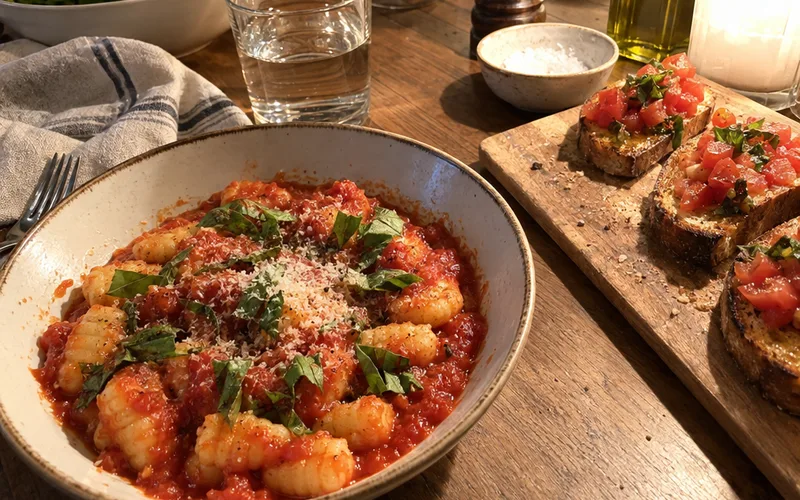
That’s why bruschetta is “broo-SKET-tah” in Italy, not “broo-SHET-tah.” So try reading an Italian menu out loud, since food words are packed with these pairs.
Double Consonants Change the Meaning
A double consonant in Italian is held a beat longer than a single one, and that extra length can change a word’s meaning. Skip it and you might say a completely different word.
Here are 4 pairs where one extra letter changes everything:
- nono (ninth) vs nonno (grandpa)
- sete (thirst) vs sette (seven)
- capello (a hair) vs cappello (hat)
- caro (dear) vs carro (cart)
Here’s how to do it: pause slightly on the consonant before releasing it, like the “k” sound in “bookcase.”
Almost every consonant can be doubled, so you’ll see pairs like tt, ss, pp and zz everywhere. Treat every double letter as a signal to slow down for a split second.
What Do Italian Accent Marks Do?
Italian accent marks show which syllable to stress and, on E and O, whether the vowel is open or closed. You’ll mostly see them on the last letter of a word.
Italian uses 2 marks:
- Grave accent: à, è, ì, ò, ù, as in città (city), caffè (coffee) and più (more)
- Acute accent: mostly é, as in perché (why or because)
The accent also separates short words that would otherwise look identical. For example, è (is) vs e (and), sì (yes) vs si (oneself), and là (there) vs la (the).
Note: Most Italian words carry no written accent, and the stress usually falls on the second-to-last syllable, as in pa-TA-ta (potato) or a-MI-co (friend). The marks only appear when the stress lands somewhere you wouldn’t expect, mainly at the end.
How Do Italians Spell Words Over the Phone?
Italians spell words out loud with city names instead of the English “A as in apple” habit. ThoughtCo’s Italian phonetic alphabet entry (updated May 18, 2025) says the names are typically provincial capital cities, so A is “A come Ancona” (A like Ancona).
Here’s the common set:
- A come Ancona, B come Bologna, C come Catania, D come Domodossola
- E come Empoli, F come Firenze, G come Genova, H come hotel
- I come Imola, L come Livorno, M come Milano, N come Napoli
- O come Otranto, P come Palermo, Q come quaderno, R come Roma
- S come Savona, T come Torino, U come Udine, V come Venezia, Z come Zara
The borrowed letters get words too. The same entry lists J as gei or i lunga, spelled “come jolly,” the joker in Italian card games, and W as vu doppio, “come Washington.”
The list isn’t rigid. ThoughtCo notes that even native Italian speakers sometimes disagree about which cities to use.
Its only rule is to avoid a letter and town pair that could be mistaken for another, so any well-known city works if it’s clear.
Pro Tip: Practice spelling your own name this way before a trip, since hotel bookings and phone calls are where you’ll need it.
How to Learn the Italian Alphabet
Learning the Italian alphabet takes 3 steps: memorize the 21 letter names, learn the sound rules, then read real words out loud against native audio to check yourself. Here’s a simple routine:
- Learn the 21 names in 3 groups of 7. Say each group aloud from the chart above until you can recite it without looking.
- Drill the sound rules on words you know. Food is perfect: gelato, spaghetti, gnocchi, bruschetta and cappuccino cover soft G, GH, GN, SCH and double consonants.
- Check your sounds against native speakers. The Promova app’s App Store listing, for example, says it gives real-time feedback on your pronunciation when you say words out loud, and other apps to learn Italian offer native audio too.
- Read along with real speech. Watching Italian shows with Italian subtitles lets you see a word’s spelling and hear it at the same moment, so you learn from TV and drill the alphabet together.
- Move on to short phrases. Reading everyday Italian phrases aloud puts every rule to work in context.
Once the letters feel automatic, move on to vocabulary and grammar with a plan for learning Italian on your own.
Start With Your Own Name
The Italian alphabet is small, regular and quick to learn.
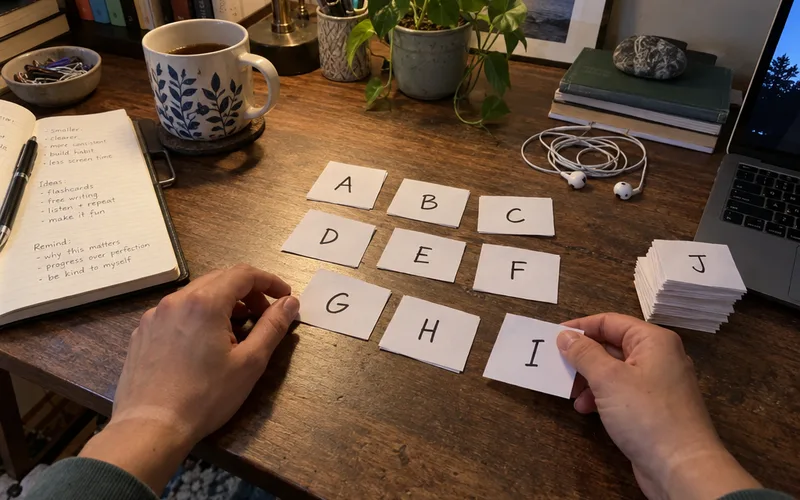
This week, spell your first and last name out loud in Italian, letter by letter, then again with the city names. If you can do both without the chart, you’ve got the alphabet down.
Frequently Asked Questions
Does the Italian alphabet have J?
No, J isn’t one of the 21 native Italian letters. Italians call it i lunga, the long I, and use it only in borrowed words such as jeans and jazz and in foreign names.
Why is there no W in the Italian alphabet?
W sits outside the 21 native letters because Italian spelling never needs it: the sound is written with U, as in uomo (man) and quattro (four). W shows up only in borrowed words and names, such as weekend and Washington.
What letters are used in Italian?
Italian uses 21 letters: A, B, C, D, E, F, G, H, I, L, M, N, O, P, Q, R, S, T, U, V and Z. The 5 extra letters J, K, W, X and Y appear only in words borrowed from other languages.
Is Italian spelled the way it sounds?
Yes, Italian is mostly spelled the way it sounds, so once you learn the letter sounds and the pair rules for ch, gh, gn, gl and sc, you can read nearly any word aloud. Stress and open or closed vowels still take some listening practice.
How do you say alphabet in Italian?
The Italian word for alphabet is alfabeto, said ahl-FAH-beh-toh. With the article it becomes l’alfabeto, as in l’alfabeto italiano, the Italian alphabet.