One Italian word, prego, does at least 4 different jobs.
It means you’re welcome, don’t mention it, by all means and after you. That’s how the Italian language works for travelers: a small set of words covers a lot of ground.
Below are 30 Italian language phrases in the order you’ll need them on a day in Italy, from your first hello to paying the check. Each one comes with a sounds-like guide and a line on when to use it.
Use this to jump in:
- On the plane with zero Italian: #2, #8, #9, #11 and #13 come first.
- Eating out tonight means #21 to #26, from the table to the bill.
- Shoppers and market browsers get the most from #27 and #28, plus the numbers table further down.
How These Phrases Were Chosen
The top-ranking Italian phrase lists and Google’s AI summary all group phrases into 6 moments. Those are greetings, polite words, getting around, eating out, shopping and asking for help.
They’re ordered the way a traveler’s day in Italy runs, not by difficulty.
Every phrase gets a sounds-like spelling, with the stressed syllable in capitals.
The 30 Most Useful Italian Phrases, in the Order You’ll Need Them
The 30 most useful Italian phrases for a trip start with ciao and buongiorno and end with aiuto, the word for help. Learn them one moment at a time.
1. Ciao (Hi and Bye)
Ciao is the casual Italian word for both hello and goodbye. It’s also the easiest one to use in the wrong place.
Sounds like: CHOW
Best for: friends, kids, people your age and relaxed cafés. Skip it if you’re greeting an older stranger or a hotel clerk.
The word signals that you’re on familiar terms. So with someone you’ve just met, start with buongiorno and switch once they do.
2. Buongiorno (Good Morning)
Buongiorno is the polite all-day greeting until late afternoon. Use it walking into any shop, café, museum or office.
Sounds like: bwon-JOR-noh
Best for: strangers, shopkeepers and anyone older than you.
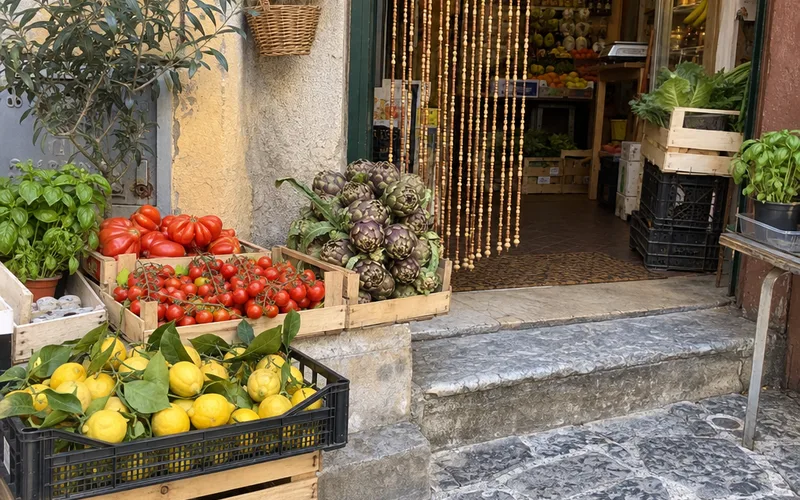
Here’s the habit to build: say buongiorno the moment you walk into a small shop, before you look at anything.
3. Buonasera (Good Evening)
Buonasera is the polite greeting for the evening, and it takes over from buongiorno in the late afternoon.
Sounds like: bwoh-nah-SEH-rah
Best for: dinner reservations, evening shops and the hotel desk after work hours.
Buonasera also works as a goodbye when you leave a shop or restaurant at night.
4. Salve (Hello, Polite but Relaxed)
Salve is a neutral hello that works at any hour and with almost anyone. It sits between the casual and the formal greetings.
Sounds like: SAHL-veh
Best for: moments when you can’t tell if ciao is too casual. Skip it at a formal event, where buongiorno or buonasera sounds better.
In other words, salve is your safety net when you freeze on which greeting to use.
5. Arrivederci (Goodbye)
Arrivederci is the standard polite goodbye. It literally means “until we see each other again.”
Sounds like: ah-ree-veh-DEHR-chee
Best for: leaving shops, restaurants and anyone you greeted with buongiorno. With friends, ciao works just as well.
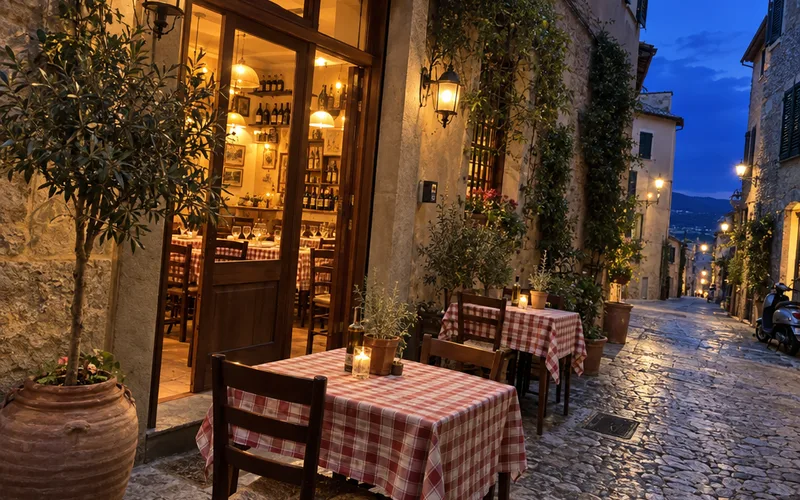
The catch? The double R. Tap your tongue against the roof of your mouth twice on “rr,” and you’ll sound much more natural.
6. Come Sta? (How Are You?)
Come sta is the formal way to ask how someone is, and come stai is the casual version. The usual answer is bene, grazie (fine, thanks).
Sounds like: KOH-meh STAH (formal), KOH-meh STAH-ee (casual)
Best for: a host, a landlord or a tour guide you’ve just met. Use come stai with people your age once you’re chatting.
Here’s a 3-line exchange to practice, where E Lei means “and you” in the polite form:
- You: Come sta?
- Host: Bene, grazie. E Lei?
- You: Bene, grazie.
7. Mi Chiamo… (My Name Is…)
Mi chiamo is how you introduce yourself in Italian, followed by your name.
Sounds like: mee KYAH-moh
Best for: meeting hosts, classmates or fellow travelers. Add piacere (nice to meet you) after the other person says their name.
Try it as one smooth line, a full introduction in 5 words: “Ciao, mi chiamo Sam, piacere.”
8. Per Favore (Please)
Per favore means please, and it turns any bare word into a polite request.
Sounds like: pehr fah-VOH-reh
Best for: every order, every request and every question to a stranger.
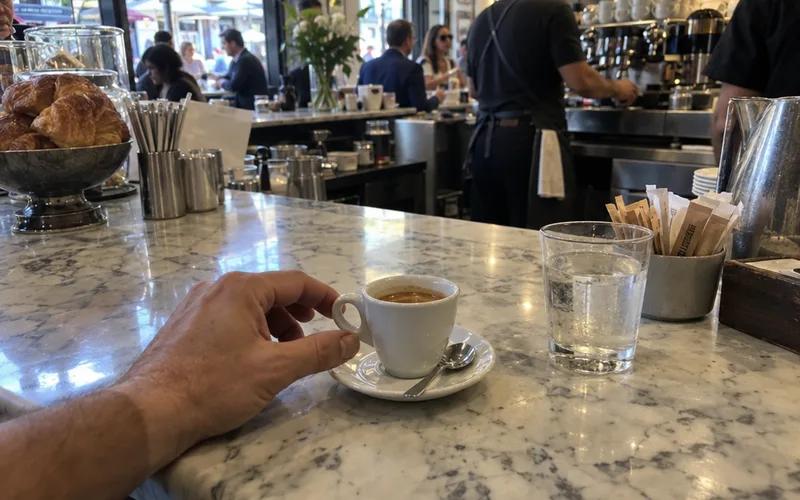
That’s why per favore pairs with so many phrases on this list, from un caffè, per favore (a coffee, please) to il conto, per favore. Even a single noun plus per favore gets the job done.
9. Grazie and Grazie Mille (Thank You)
Grazie means thank you, and grazie mille means thank you very much. Mille is the Italian word for a thousand.
Sounds like: GRAHT-tsyeh, GRAHT-tsyeh MEEL-leh
Best for: absolutely everyone. Skip grazie mille only when it would sound over the top, like after someone hands you a napkin.
The most common slip is saying “gra-zee.” Italian ends the word with a clear “eh” sound, so finish it: GRAHT-tsyeh.
10. Prego (You’re Welcome, and More)
Prego is the reply to grazie, and it also means go ahead or after you.
Sounds like: PREH-goh
Best for: answering thanks, holding a door or letting someone go first. You may hear it from a waiter setting down your plate, too.
So if someone says prego while waving you through a doorway, they’re saying “go ahead.”
11. Mi Scusi (Excuse Me)
Mi scusi means excuse me or pardon me in the polite form. Use it to get attention, ask for help or squeeze past someone.
Sounds like: mee SKOO-zee
Best for: strangers, waiters and shop staff. With friends, the casual form is scusa (SKOO-zah).
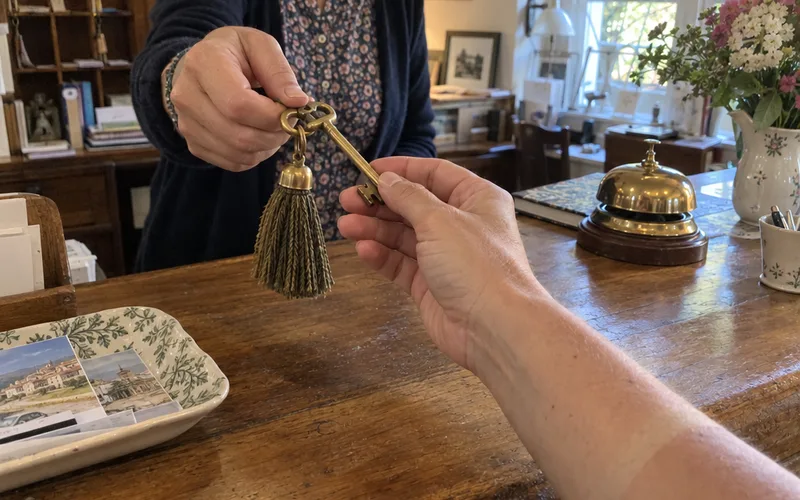
Mi scusi is the phrase to say first whenever you need something from a stranger. Then add your question, like “Mi scusi, dov’è la stazione?”
12. Mi Dispiace (I’m Sorry)
Mi dispiace means I’m sorry, the way you’d apologize for bumping into someone or bringing bad news.
Sounds like: mee dees-PYAH-cheh
Best for: real apologies and polite refusals. For a quick “sorry, coming through,” mi scusi fits better.
You’ll also hear it from staff when something’s sold out: “Mi dispiace, è finito.” That means “Sorry, it’s gone.”
13. Parla Inglese? (Do You Speak English?)
Parla inglese asks a stranger if they speak English, using the polite form. Parli inglese is the casual version for people your age.
Sounds like: PAHR-lah een-GLEH-zeh
Best for: opening a hard conversation, like a pharmacy visit or a booking problem. Skip it at a café counter, where a few Italian words do the job.
Asking in Italian first is the polite move, so open with “Mi scusi, parla inglese?”
If the answer is un po’ (a little), slow down and keep your words simple.
14. Non Capisco (I Don’t Understand)
Non capisco means I don’t understand, and it’s the honest way to stop a conversation you can’t follow.
Sounds like: nohn kah-PEES-koh
Best for: any moment you’re lost in a fast reply. Pair it with #15 or #16 to keep things moving.
Don’t just nod along. Saying non capisco early saves you from ordering the wrong dish or missing your train platform.
15. Può Ripetere, per Favore? (Can You Repeat That?)
Può ripetere, per favore asks someone to repeat what they said, and it’s polite enough for any stranger.
Sounds like: PWOH ree-PEH-teh-reh, pehr fah-VOH-reh
Best for: train announcements you half caught, prices you didn’t hear and directions with too many turns.
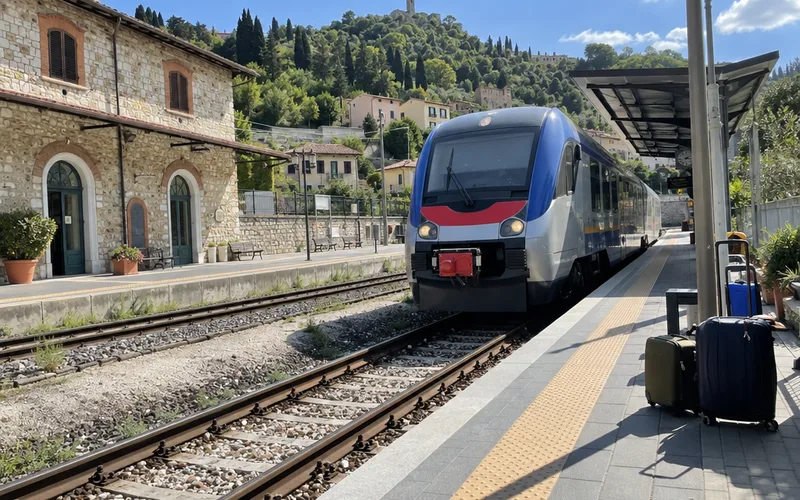
Say you miss the price at a ticket counter. Ask the clerk to repeat it, and if it’s still a blur, ask them to write it down with “Può scriverlo, per favore?”
16. Più Piano, per Favore (Slower, Please)
Più piano, per favore means slower, please. It’s the phrase that turns a fast Italian answer into one you can follow.
Sounds like: pyoo PYAH-noh, pehr fah-VOH-reh
Best for: directions, instructions and fast answers.
Piano also shows up in the saying piano piano, little by little, which is a good mindset for learning phrases too.
17. Dov’è…? (Where Is…?)
Dov’è means where is, and adding any place turns it into a complete question.
Sounds like: doh-VEH
Best for: finding a station, a museum, your hotel or a pharmacy.
Here are 4 endings worth learning with it:
- la stazione (the station)
- il museo (the museum)
- la farmacia (the pharmacy)
- l’albergo (the hotel)
18. Dov’è il Bagno? (Where’s the Bathroom?)
Dov’è il bagno asks where the bathroom is, and it’s the question you’ll be most glad you learned.
Sounds like: doh-VEH eel BAHN-yoh
Best for: restaurants, bars, museums and train stations.
Public signs in Italy often say WC, servizi or toilette instead of bagno. Uomini means men and donne means women.
19. Un Biglietto per… (One Ticket to…)
Un biglietto per asks for one ticket to a place, and due biglietti per asks for two.
Sounds like: oon beel-YET-toh pehr
Best for: train stations across Italy, buses, trams, ferries and museum desks.
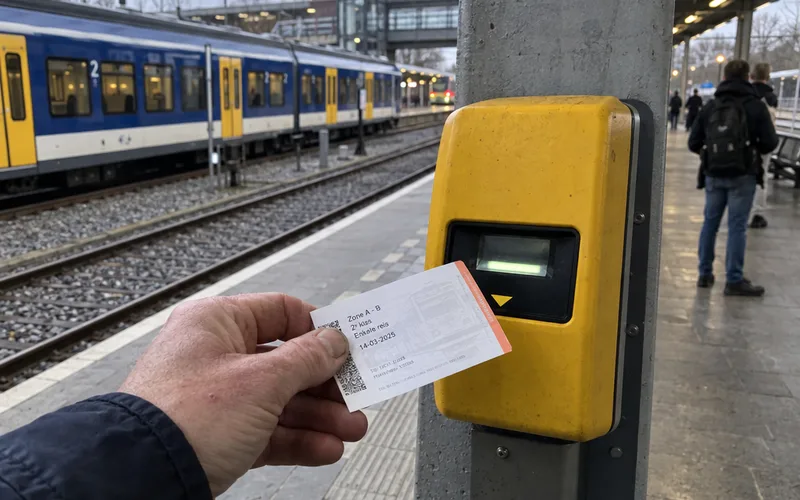
Here’s the full script at a train counter: “Buongiorno, un biglietto per Firenze, per favore.” Then add andata e ritorno (round trip) or solo andata (one way).
20. A Destra, a Sinistra, Sempre Dritto (Right, Left, Straight Ahead)
A destra means to the right, a sinistra means to the left, and sempre dritto means keep going straight. These are the 3 phrases to listen for in any set of Italian directions.
Sounds like: ah DEHS-trah, ah see-NEES-trah, SEHM-preh DREET-toh
Best for: understanding the answer after you ask dov’è. You need to recognize these more than say them.
Watch the speaker’s hands as they talk, since the gestures usually match these 3 phrases.
21. Vorrei… (I Would Like…)
Vorrei means I would like, and it’s the polite way to order anything in Italy.
Sounds like: vohr-RAY
Best for: coffee bars, restaurants, pizza counters, bakeries, gelato shops and ticket desks. It sounds softer than voglio (I want).
Vorrei plus a noun plus per favore is the only ordering formula you need. It works for vorrei un gelato, per favore and vorrei una pizza margherita, per favore alike.
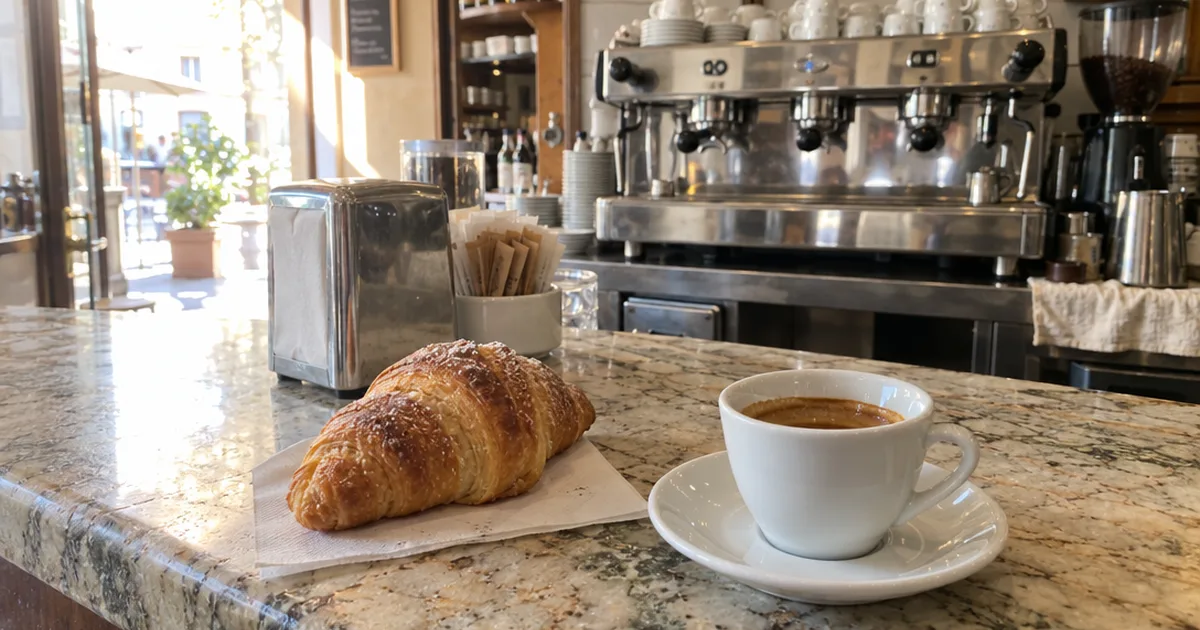
22. Un Caffè, per Favore (An Espresso, Please)
Un caffè, per favore orders an espresso, because in Italy caffè means espresso by default.
Sounds like: oon kahf-FEH, pehr fah-VOH-reh
Best for: any bar, which is what Italians call a café. For milk coffee, ask for un cappuccino or un latte macchiato.
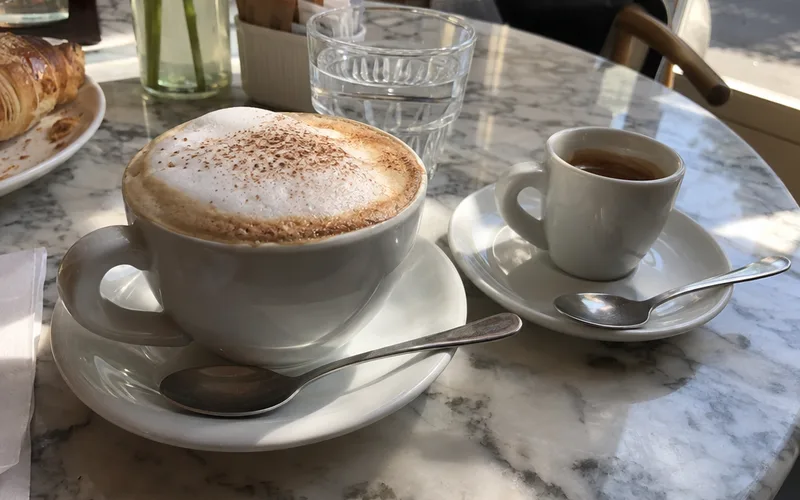
Coffee in Italy has its own vocabulary, so learn these 3 before you go:
- un cappuccino: espresso with foamed milk
- un caffè macchiato: espresso with a splash of milk foam
- un latte: a glass of milk, not a latte
Order un latte and you’ll get just milk, so say latte macchiato when you want coffee in it.
23. Un Tavolo per Due (A Table for Two)
Un tavolo per due asks for a table for two. Change the number for your group: uno, tre or quattro.
Sounds like: oon TAH-voh-loh pehr DOO-eh
Best for: walking into a restaurant or pizza place without a booking. To book ahead, ask “Posso prenotare un tavolo?”
Start with the greeting, then the table: “Buonasera, un tavolo per quattro, per favore.”
24. Sono Allergico a… (I’m Allergic To…)
Sono allergico a… means I’m allergic to, said by a man, and a woman says sono allergica a. Add the food after it.
Sounds like: SOH-noh ahl-LEHR-jee-koh (man), ahl-LEHR-jee-kah (woman)
Best for: anyone with a food allergy or intolerance. Skip it if you just dislike a food: non mi piace means I don’t like it.
Write it down too, since a card that says “Sono allergico alle noci” (I’m allergic to nuts) is easy to show a busy waiter.
25. Il Conto, per Favore (The Check, Please)
Il conto, per favore asks for the check at the end of a meal. It’s the polite way to say you’re ready to pay.
Sounds like: eel KOHN-toh, pehr fah-VOH-reh
Best for: the end of any sit-down meal.
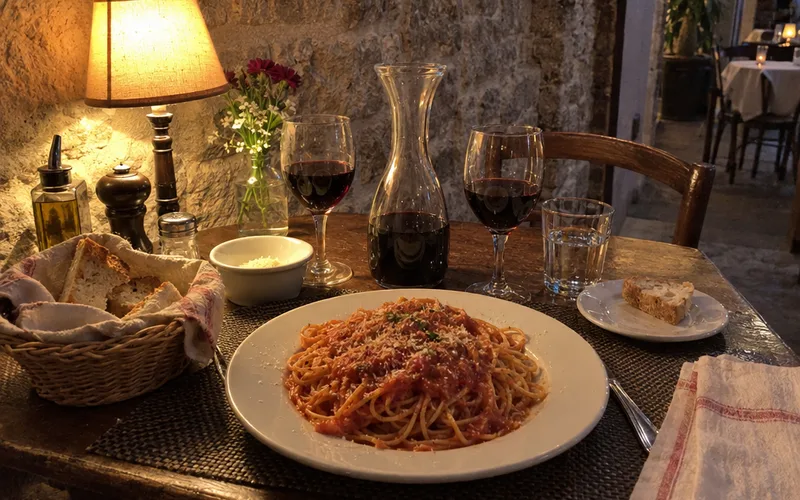
So ask when you’re ready rather than waiting for the bill to appear. Raise a hand and say “Mi scusi, il conto, per favore.”
26. Accettate Carte di Credito? (Do You Take Credit Cards?)
Accettate carte di credito asks whether a place takes credit cards. A shorter option is posso pagare con la carta, which means can I pay by card.
Sounds like: ah-cheht-TAH-teh KAHR-teh dee KREH-dee-toh
Best for: small trattorias, market stalls and taxis. Ask before you order, not after.
If the answer is solo contanti, that means cash only. Carry some euros in Italy for exactly that moment.
27. Quanto Costa? (How Much Is It?)
Quanto costa asks how much something costs, and quanto costano asks about more than one item.
Sounds like: KWAHN-toh KOH-stah
Best for: markets, souvenir stalls and anything without a price tag. If the price feels high, è troppo caro means it’s too expensive.
The answer is the hard part, because prices come back in fast Italian numbers. Learn 1 to 10 from the numbers table below, then practice hearing prices like dieci euro (10 euros).
28. Lo Prendo (I’ll Take It)
Lo prendo means I’ll take it. It’s how you say yes to a purchase.
Sounds like: loh PREHN-doh
Best for: shops and markets once you’ve decided. If you’re not ready, say “Grazie, ci penso” (thanks, I’ll think about it).
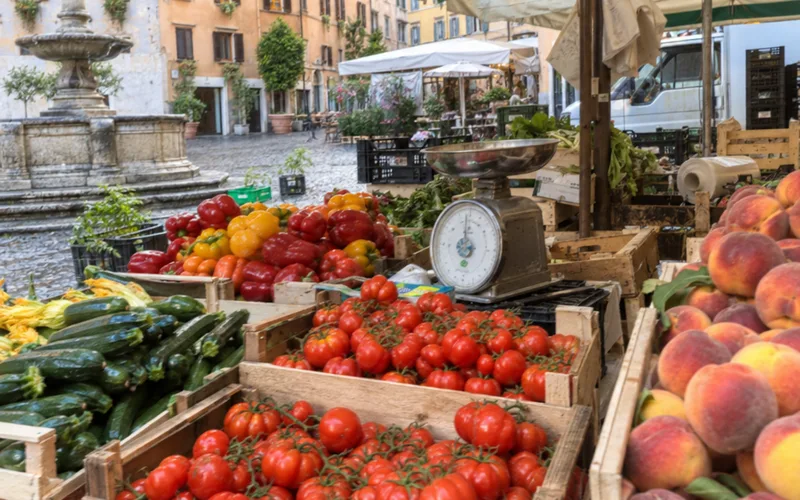
That pair gives you a polite yes and a polite no. Add quanto costa, and you have the whole shopping exchange.
29. Mi Può Aiutare? (Can You Help Me?)
Mi può aiutare asks a stranger for help in the polite form, so follow it with what you need.
Sounds like: mee PWOH ah-yoo-TAH-reh
Best for: lost luggage, a broken ticket machine or a missed connection. Start with mi scusi to get attention.
If you’re lost, say “Mi scusi, mi può aiutare, mi sono perso.” A woman says mi sono persa, and both mean I’m lost.
30. Aiuto! (Help!)
Aiuto means help, and it’s the word to shout in an emergency.
Sounds like: ah-YOO-toh
Best for: real emergencies only. For a medical problem, add chiamate un medico (call a doctor) or chiamate un’ambulanza (call an ambulance).
Learn this one even if you skip the rest.
Italian Phrases Cheat Sheet
This cheat sheet lists all 30 Italian language phrases with their meaning and a sounds-like guide. Screenshot it or print it for your trip:
| Italian | English | Sounds like |
|---|---|---|
| Ciao | Hi / bye | CHOW |
| Buongiorno | Good morning | bwon-JOR-noh |
| Buonasera | Good evening | bwoh-nah-SEH-rah |
| Salve | Hello | SAHL-veh |
| Arrivederci | Goodbye | ah-ree-veh-DEHR-chee |
| Come sta? | How are you? | KOH-meh STAH |
| Mi chiamo… | My name is… | mee KYAH-moh |
| Per favore | Please | pehr fah-VOH-reh |
| Grazie (mille) | Thank you (very much) | GRAHT-tsyeh |
| Prego | You’re welcome | PREH-goh |
| Mi scusi | Excuse me | mee SKOO-zee |
| Mi dispiace | I’m sorry | mee dees-PYAH-cheh |
| Parla inglese? | Do you speak English? | PAHR-lah een-GLEH-zeh |
| Non capisco | I don’t understand | nohn kah-PEES-koh |
| Può ripetere? | Can you repeat? | PWOH ree-PEH-teh-reh |
| Più piano | Slower | pyoo PYAH-noh |
| Dov’è…? | Where is…? | doh-VEH |
| Dov’è il bagno? | Where’s the bathroom? | doh-VEH eel BAHN-yoh |
| Un biglietto per… | One ticket to… | oon beel-YET-toh |
| A destra / a sinistra | Right / left | ah DEHS-trah |
| Vorrei… | I would like… | vohr-RAY |
| Un caffè | An espresso | oon kahf-FEH |
| Un tavolo per due | A table for two | oon TAH-voh-loh |
| Sono allergico a… | I’m allergic to… | SOH-noh ahl-LEHR-jee-koh |
| Il conto | The check | eel KOHN-toh |
| Accettate carte? | Do you take cards? | ah-cheht-TAH-teh |
| Quanto costa? | How much is it? | KWAHN-toh KOH-stah |
| Lo prendo | I’ll take it | loh PREHN-doh |
| Mi può aiutare? | Can you help me? | mee PWOH ah-yoo-TAH-reh |
| Aiuto! | Help! | ah-YOO-toh |
If you only have time for 10, take #2, #3, #8, #9, #11, #13, #18, #21, #25 and #27. Those 10 phrases cover greeting, asking, eating, paying and finding a bathroom.
When to Say Buongiorno, Buonasera and Buonanotte
Buongiorno is the Italian greeting from morning through the afternoon, and buonasera takes over around 4 or 5 p.m., or once it gets dark. Buonanotte (good night) is only for bedtime or a final goodbye at night.
Phrase lists disagree here, with some switching to buonasera right after lunch and others waiting until dark.
The simple rule? If it’s still light out and you haven’t had dinner, say buongiorno.
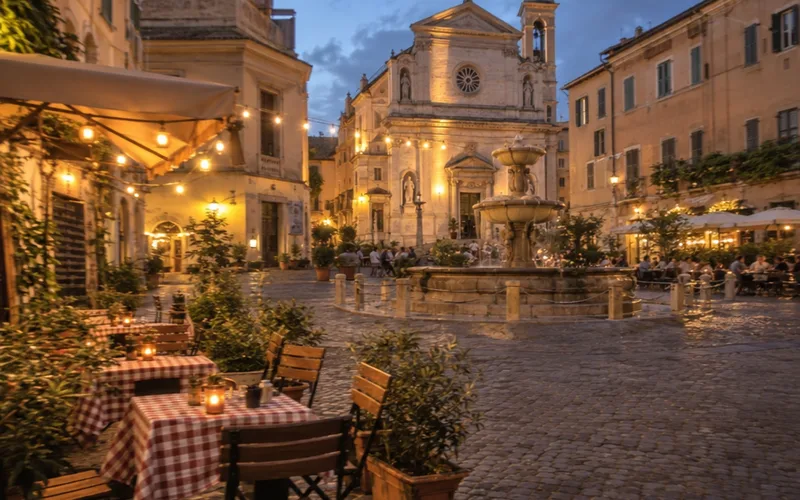
Once you’re heading out for the evening, switch to buonasera.
And when you’re not sure, say salve. It works at any hour and saves you the guess.
Formal vs. Informal Italian Phrases
Formal Italian phrases use Lei, the polite word for you, and informal phrases use tu, so a question’s verb ending changes with who you’re talking to. Use the formal form with strangers, staff and anyone older, and the informal form with friends, kids and people your age.
Here are the 5 pairs you’ll use most:
| Informal (tu) | Formal (Lei) | English |
|---|---|---|
| Come stai? | Come sta? | How are you? |
| Scusa | Mi scusi | Excuse me |
| Parli inglese? | Parla inglese? | Do you speak English? |
| Mi puoi aiutare? | Mi può aiutare? | Can you help me? |
| Ciao | Buongiorno | Hello |
Notice the pattern in the questions: the informal verb usually ends in -i (stai, parli) and the formal one in -a (sta, parla). Commands flip it, so scusa is informal and mi scusi is formal.
When in doubt, start formal and let the other person switch you to tu. Someone who wants to drop the formality may say “Dammi del tu” (use tu with me).
Italian Phrases That Change for Men and Women
Italian phrases that describe the speaker change with gender: a man says sono perso (I’m lost) and a woman says sono persa. The -o ending is masculine and the -a ending is feminine.
That comes from Italian grammar, where adjectives match the person they describe. Many phrase lists print only one form, so it’s easy to learn the wrong one.
Here are 4 you’re likely to need:
- Sono perso / persa (I’m lost)
- Sono allergico / allergica (I’m allergic)
- Sono americano / americana (I’m American)
- Sono stanco / stanca (I’m tired)
Grazie, per favore and vorrei never change, so only the describing words need the form that fits you.
Italian Phrases With Pronunciation: 5 Sound Rules
Italian phrases are easy to pronounce once you learn 5 sound rules, because Italian spelling matches its sounds almost letter for letter. Learn these, and you can read any phrase on this page out loud.
- C and G go soft before E and I. Cena (dinner) sounds like CHEH-nah, and gelato starts with a J sound. Before A, O and U they stay hard, as in casa and grazie.
- CH and GH stay hard. The H keeps the hard sound before E and I, so che sounds like “keh” and spaghetti like “spa-GET-tee.”
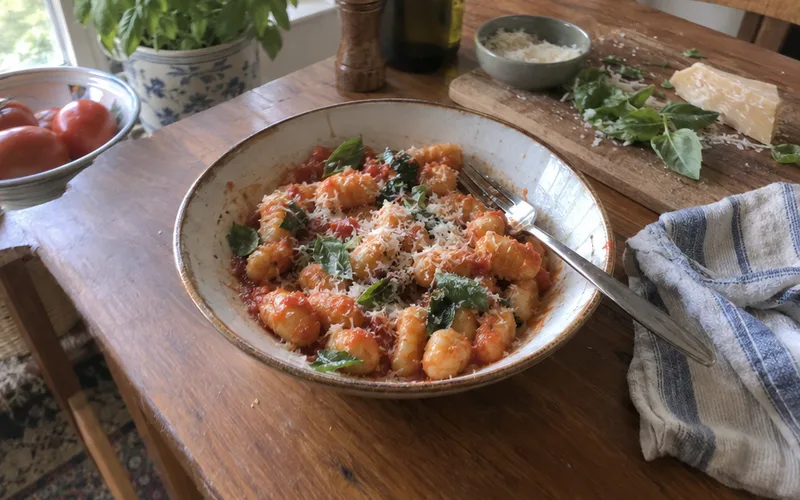
- GN sounds like the ny in canyon. Bagno is BAHN-yoh, and gnocchi is NYOK-kee.
- GLI sounds like the lli in million. Biglietto is beel-YET-toh, not big-lee-etto.
- Double consonants get held longer. Hold the double N in nonno (grandfather) longer than the single N in nono (ninth), and the RR in carro (cart) longer than the R in caro (dear).
Some words differ only by a double letter, so holding the sound is part of the meaning.
For every letter’s name and sound, plus the 5 letters Italian borrows, see the full Italian alphabet before you drill these phrases.
Italian Expressions Italians Actually Say
Italian expressions like allora, boh, dai and magari come up all the time in real conversation, yet many travel phrase lists skip them. Recognizing them helps you follow Italians, even if you never say them.
Here are 8 worth knowing, with what they mean and when you’ll hear them:
| Expression | Meaning | When you’ll hear it |
|---|---|---|
| Allora | So / well | Starting a sentence |
| Boh | Who knows | A verbal shrug |
| Dai! | Come on! | Urging or teasing |
| Magari | If only / maybe | Wishful answers |
| Che figata! | How cool! | Something great |
| Mamma mia! | Wow / oh no | Surprise of any kind |
| In bocca al lupo | Good luck | Before a test or trip |
| Buon appetito | Enjoy your meal | Before eating |
One custom goes with in bocca al lupo, which literally means “into the wolf’s mouth.” The reply isn’t grazie: you answer crepi (may it die), meaning the wolf.
For beautiful Italian phrases about life, 2 classics stand out. La dolce vita means the sweet life, and dolce far niente means the sweetness of doing nothing, the art of an unhurried afternoon.
Italian Numbers for Prices and Tables
Italian numbers from 1 to 10 are uno, due, tre, quattro, cinque, sei, sette, otto, nove and dieci. You’ll use them for coffee and pizza prices, table sizes, train platforms and ticket counts.
Here’s how to say them:
| Number | Italian | Sounds like |
|---|---|---|
| 1 | uno | OO-noh |
| 2 | due | DOO-eh |
| 3 | tre | treh |
| 4 | quattro | KWAHT-troh |
| 5 | cinque | CHEEN-kweh |
| 6 | sei | say |
| 7 | sette | SEHT-teh |
| 8 | otto | OHT-toh |
| 9 | nove | NOH-veh |
| 10 | dieci | DYEH-chee |
Prices in Italy add the word euro, which doesn’t change in the plural: tre euro is 3 euros. Cents are centesimi, so 2,50 € is due euro e cinquanta.
How to Learn Italian Phrases Before Your Trip
The simplest way to learn Italian phrases before a trip is to say 5 a day out loud, review them with spaced repetition flashcards and hear them in real Italian speech. That mix builds recall, pronunciation and listening together.
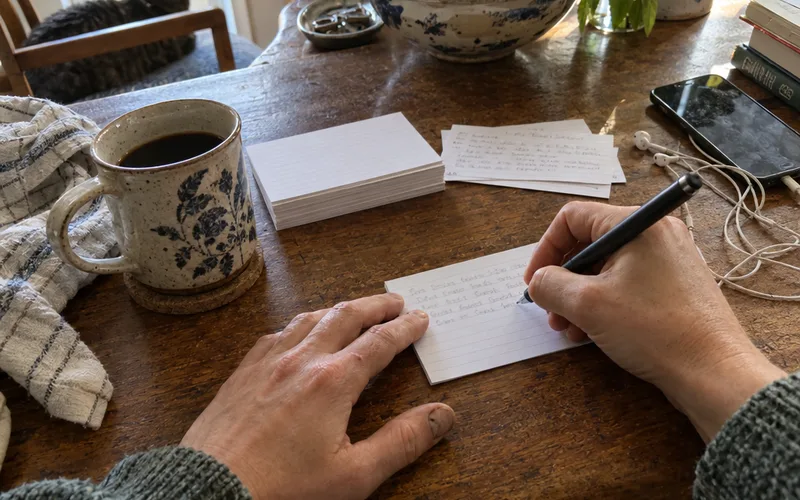
Here’s a simple 4-step routine:
- Pick 5 phrases a day from the list above, starting with #1 to #13.
- Say each one out loud 10 times while reading the sounds-like guide.
- Add them to a deck in a spaced repetition app, which shows each card again right before you’d forget it, the same trick that helps you memorize vocabulary in any language.
- Copy native speakers by shadowing audio: play a line, pause, and repeat it with the same rhythm.
Duolingo is a free place to start, since the company’s own blog said in May 2024 that its entire Italian course is free. Our Duolingo Italian review covers how far it takes you.
For listening, free audio Italian lessons and language podcasts fit a commute. And watching Italian TV with subtitles lets you hear allora and dai in context.
If you’d rather use apps built around a trip, compare the Italian travel apps first.
For speaking, you can practice speaking alone by narrating your day in Italian. To go past phrases, follow a plan for learning Italian on your own and a steady routine for learning a new language.
What to Do When Your Italian Runs Out
When your Italian runs out, ask the person to repeat or slow down, then try parla inglese, then a translation app like Google Translate. That order keeps as much of the conversation in Italian as possible.
Start with #14 to #16, since non capisco, può ripetere and più piano buy you time before you need English.
Next, download your translation app’s Italian pack so it works offline if you lose signal. Point at the screen and say “Mi scusi, per favore,” and let the other person read along.
For bigger problems, like a hospital visit in Italy, check your travel insurance. Generali Global Assistance says on its own page that all of its plans include a 24/7 phone line that can help with interpretation in all major languages.
Save your own insurer’s assistance number in your phone before you fly.
Frequently Asked Questions
What are 20 basic Italian phrases for beginners?
The 20 basic Italian phrases beginners need most are ciao, buongiorno, buonasera, arrivederci, per favore, grazie, prego, mi scusi, mi dispiace, sì, no, come sta?, mi chiamo, parla inglese?, non capisco, dov’è il bagno?, vorrei, quanto costa?, il conto, per favore and aiuto!
Learn them in that order, and you can greet people, order, pay and ask for help.
What is a typical Italian phrase?
Allora is one of the most typical Italian words you’ll hear, a filler that means so, well or then, used to start a sentence or buy a second to think. Dai (come on) and boh (who knows) come right behind it.
What does bo bo bo mean in Italian?
Bo bo bo is a stretched-out spelling of boh, the Italian sound for I don’t know or who knows. Repeating it just makes the shrug bigger.
It’s casual, so save it for friends, not a hotel desk.
What does "ciao tutti" mean?
Ciao tutti means hi everyone or bye everyone, but the standard Italian form is ciao a tutti, with a in the middle.
Say ciao a tutti when you walk into a room of friends or start a group message.
What is the C rule in Italian?
The C rule in Italian says C sounds like the ch in church before E or I, as in cena and cielo, and like a K before A, O, U or H, as in casa and che. G follows the same pattern, soft in gelato and hard in grazie.
What is a famous quote in Italian?
The most famous Italian quote is Dante’s line from the Inferno, Lasciate ogne speranza, voi ch’intrate, which means abandon all hope, you who enter. For everyday life, the proverb chi va piano, va sano e va lontano (slow and steady goes far) is more useful.
How do you flirt in Italian?
The simplest Italian compliment is sei bellissima to a woman or sei bellissimo to a man, which means you’re beautiful. To ask someone out, try ti va di prendere un caffè?, would you like to get a coffee?
Keep it light and use tu only once you’re already chatting.
How do you say "what are you saying" in Italian?
What are you saying in Italian is cosa stai dicendo in the informal form and cosa sta dicendo in the formal one. Friends shorten it to che dici.
If you just missed the words, può ripetere, per favore (can you repeat that, please) is the politer choice.
Is there a free way to learn Italian phrases?
Duolingo is a free way to learn Italian phrases: the company’s own blog said in May 2024 that its entire Italian course is free. Free podcasts and Italian TV with subtitles work too.
Pair it with 10 minutes of flashcards a day.
Final Thoughts
Learn the polite versions first. Buongiorno, per favore, grazie and mi scusi will carry you through almost any conversation with a stranger in Italy.
This week, pick the 5 phrases you’ll need on day one, say them out loud 10 times each, and add them to a flashcard deck tonight.