Hotel, mango and tropical are already Spanish words.
So are chocolate and internet, and many “-tion” endings just become “-ción.”
That head start lets English speakers learn Spanish on their own, for free. Here are the 7 steps, each with a free tool.
- Best for: adult beginners. Skip it if you already chat in Spanish.
- Cost: Free.
- Time: 15 to 30 minutes a day.
- First step: Say the 5 vowels, a, e, i, o and u, out loud.
How to Learn Spanish Step by Step
To learn Spanish, master the sounds, then the most common words and phrases, then the core verbs, and listen and speak every day.
Step 1: Pick Your Goal and a Daily Slot
Decide why you’re learning, such as travel, work or family, and book a fixed daily slot. All language learning works this way, as the steps to learn a new language show.
Those minutes set your timeline, and how long Spanish takes turns them into a plan. Becoming fluent quickly shows that fluency takes more hours, not shortcuts.
Then do your first Spanish lesson tonight.
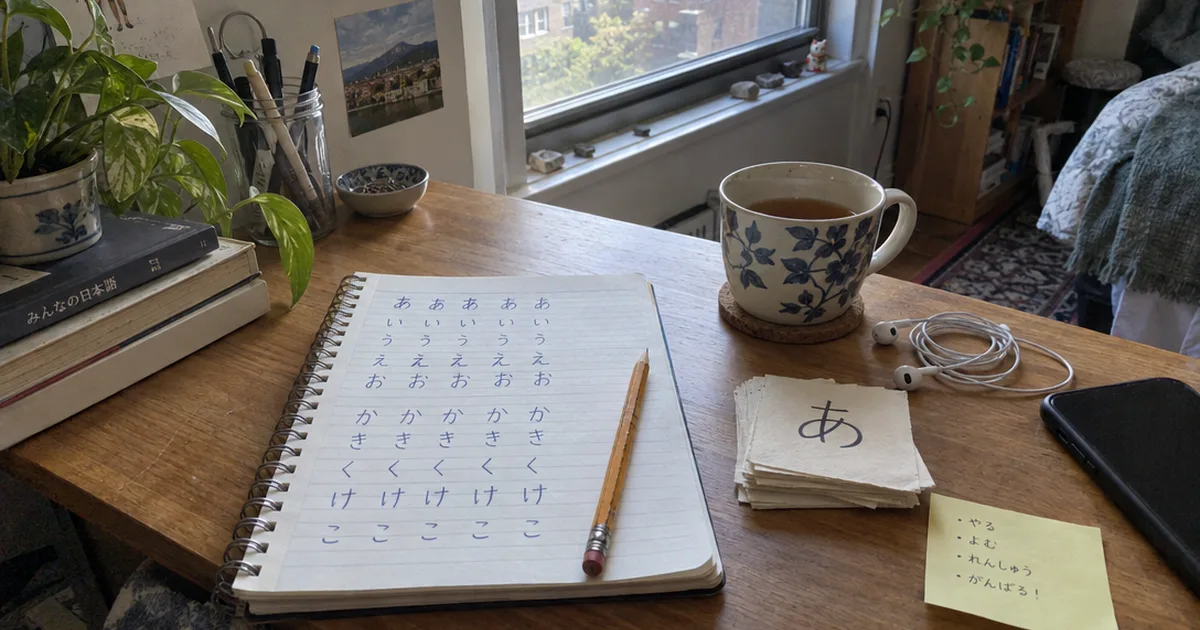
Step 2: Learn the Alphabet and Pronunciation
Spanish pronunciation is predictable, because most letters have one consistent sound.
Practice the sounds English lacks: the silent h in hola, the rolled rr in perro and the ll in calle, said like a y.
Learn the Spanish alphabet from A to Z, then sing the alphabet song lyrics. Hear hard words on Forvo, where native speakers record them, or read their phonetic transcription.
Step 3: Learn the Most Common Words and Phrases First
The 80/20 rule for Spanish means putting most of your effort into the small set of words and phrases you’ll hear most often.
Start with greetings, question words and numbers from common Spanish words, 1,000 easy words and the most common phrases.
Traveling soon? Add phrases for travel and basic Mexican words, and keep a Spanish 1 cheat sheet on your phone.
Shortcut: put quiero (I want) before a base verb, as in Quiero hablar (I want to speak).
Step 4: Lock Words In With Spaced Repetition
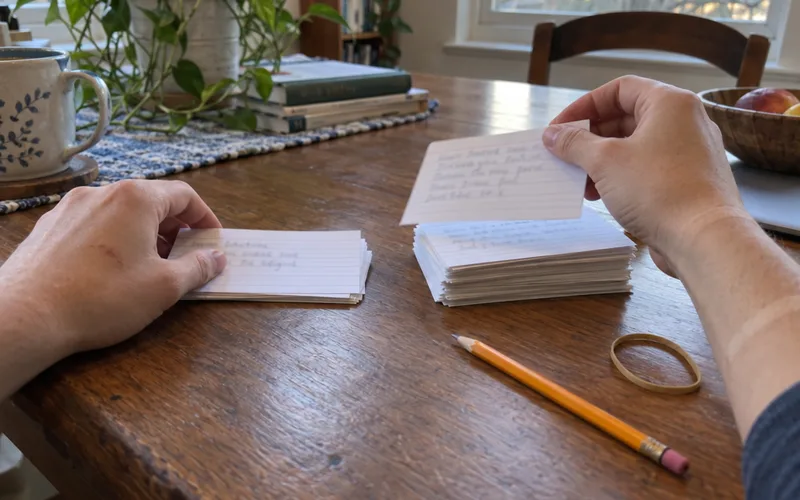
Spaced repetition shows each flashcard just before you’d forget it, so new vocabulary sticks in memory.
Anki is a free app built on it, and ready-made Anki decks for Spanish save typing. For stubborn ones, try these tricks to remember words.
Step 5: Learn the Core Grammar
Start Spanish grammar once you know your first words, and learn these 4 pieces first:
- Gender: every noun is masculine or feminine, usually -o or -a, and adjectives match it.
- Articles and plurals: definite and indefinite articles like el and una match gender and number, and plurals usually add -s or -es.
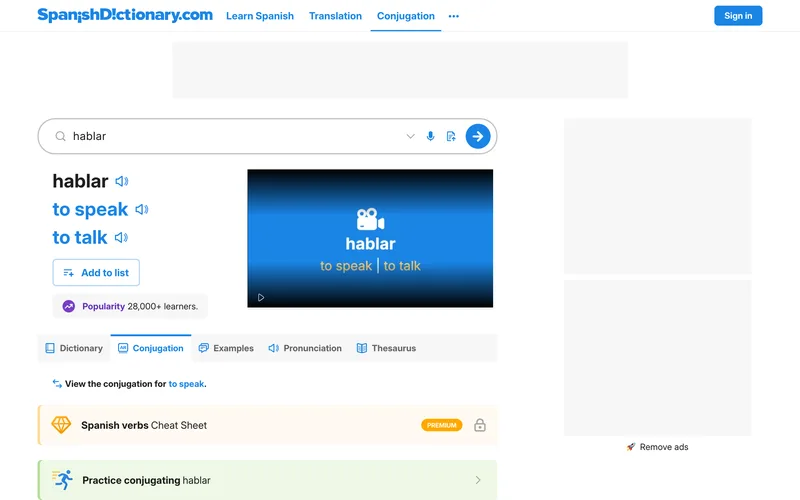
- Verbs: regular verbs end in -ar, -er or -ir, and verb conjugation changes the ending by person and tense.
- Ser vs estar: both mean “to be,” ser for lasting traits and estar for temporary states.
Drill conjugation on Conjuguemos and look up por vs para on SpanishDict.
Spanish grammar for beginners covers the rest, and a grammar book or beginner textbook adds exercises.
Step 6: Listen to Spanish Every Day
Yes, you can learn Spanish from TV. Watch with Spanish audio and subtitles, starting with Netflix shows for learners, Disney Plus picks or shows for teens.
For podcasts, listening practice by level and our Dreaming Spanish review show where to start.
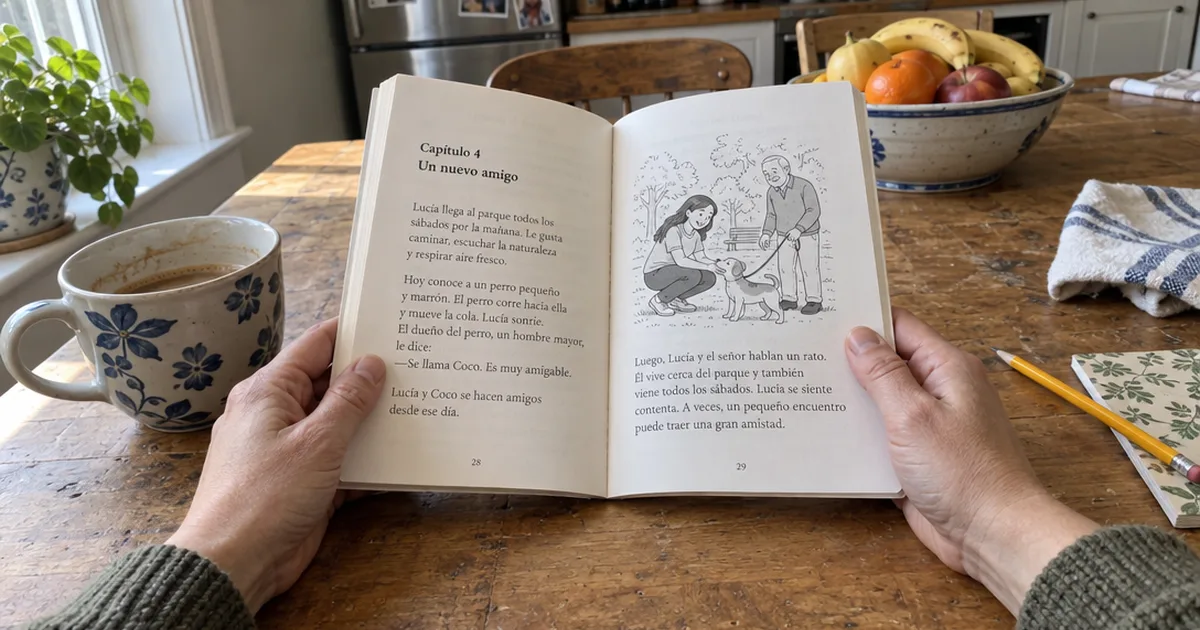
Then add reading with novels for beginners and free books.
Step 7: Speak From the First Week
You can practice speaking Spanish alone by shadowing: play one line from a native speaker, pause and repeat it in the same rhythm.
Next, message an English-Spanish language exchange partner:
“Hola, estoy aprendiendo español. ¿Practicamos 30 minutos en español y 30 en inglés?”
An AI chat app adds conversation and feedback, and programs for adults add a real teacher.
Is Duolingo Enough to Learn Spanish?
Duolingo alone isn’t enough to learn Spanish, because tapping answers can’t replace listening to native speakers and speaking yourself.
Use it as a warm-up, and see what Spanish with Duolingo can get you. The best app fits your step: Anki for vocabulary, Conjuguemos for verbs, AI chat for conversation.
Should You Learn Spain or Latin American Spanish?
The best Spanish to learn is the one you’ll hear most: Latin American Spanish for Mexican or Colombian friends and shows, or Spain’s version if you’re moving there.
The differences are mostly accent, some vocabulary and Spain’s vosotros form, so switching later is easy.
Are Spanish Immersion Programs Worth It?
A Spanish immersion program is worth it once you can hold a basic conversation, because daily life then becomes practice.
Compare immersion for adults, options for seniors, schools in Latin America and courses in Spain.
Spanish for Specific Goals
Spanish for healthcare, heritage speakers or homeschooling needs its own vocabulary and courses:
- Healthcare: medical Spanish, its core vocabulary list, the best courses online and podcasts for clinicians.
- Heritage speakers: an online heritage speaker course.
- Homeschooling: a homeschool curriculum and our Homeschool Spanish Academy review.
Frequently Asked Questions
How can I teach myself Spanish for free?
You can teach yourself Spanish for free with one free tool per skill: Forvo for sounds, Anki for vocabulary, Conjuguemos for verbs, YouTube for listening and a language exchange partner for speaking.
Can I learn fluent Spanish in 3 months?
Fluent Spanish in 3 months is unlikely for a part-time beginner. Three months of daily practice is enough to aim for greetings, simple questions and basic travel talk.
What are the benefits of learning Spanish?
The main benefits of learning Spanish are talking with Spanish-speaking family and coworkers, traveling more freely in Spain and Latin America, and enjoying the music, shows and culture in the original.
Final Thoughts
The order matters more than the app: sounds, common words, then grammar, with daily listening and speaking.
Pick your daily slot and start Step 2 this week.