One Spanish word, dolor, builds at least 6 common complaints.
Add a body part and you get dolor de cabeza (headache), dolor de garganta (sore throat) or dolor de espalda (back pain). That’s how medical Spanish vocabulary works in the Spanish language: a small core goes a long way.
Below is a medical Spanish vocabulary list of 9 word groups, in the order a visit runs:
- On a triage shift, groups #2, #3 and #8 carry the conversation.
- Front desk staff get the most from #1, #5 and #9.
The 9 Medical Spanish Vocabulary Groups, in the Order a Visit Runs
The 9 medical Spanish vocabulary groups are greetings, pain, symptoms, body parts, health history, exam instructions, tests, emergencies, and staff and places. Each noun’s el or la shows its gender.
1. Greetings and Introductions (Saludos)
A formal greeting tells the patient who you are.
Best for: front desk staff and nurses.
- Buenos días / Buenas tardes: good morning / good afternoon
- Soy el doctor / la doctora: I’m the doctor
- Soy su enfermero / enfermera: I’m your nurse
- ¿Cómo se siente hoy?: How do you feel today?
2. Pain Questions (El Dolor)
Me duele means “it hurts me,” followed by the body part.
Best for: triage staff, EMTs and travelers.
- ¿Dónde le duele?: Where does it hurt?
- ¿Desde cuándo le duele?: How long has it hurt?
- ¿Es agudo, sordo o punzante?: Is it sharp, dull or stabbing?
- Del 1 al 10, ¿qué tan fuerte es?: From 1 to 10, how strong is it?
Say me duelen for plural body parts, as in me duelen los pies.
3. Common Symptoms (Síntomas)
Tengo (I have) turns each symptom into a sentence, as in tengo fiebre.

Best for: clinic staff and pharmacists.
- la fiebre / la tos: fever / cough
- el mareo / el desmayo: dizziness / fainting
- las náuseas / los vómitos: nausea / vomiting
- la diarrea / el estreñimiento: diarrhea / constipation
- la falta de aire: shortness of breath
- el sarpullido / la picazón: rash / itching
- la gripe / la infección: influenza / infection
4. Body Parts (Partes del Cuerpo)
Body parts pair with every pain phrase in group 2.
Best for: physical exams and injuries.
- la cabeza / el cuello: head / neck
- el pecho / la espalda: chest / back
- el estómago: stomach
- el brazo / la pierna / el tobillo: arm / leg / ankle
- el corazón / los pulmones: heart / lungs
- el hueso: bone
El oído is the inner ear and hearing, while la oreja is the outer ear.
5. Allergies, Medications and Health History
Health history questions catch risks before you treat, starting with any allergy to a drug.
Best for: intake staff and anyone giving medication.
- ¿Es alérgico a algún medicamento?: Are you allergic to any medication?
- ¿Toma algún medicamento?: Do you take any medication?
- ¿Tiene diabetes, asma o artritis?: Do you have diabetes, asthma or arthritis?
- la presión alta: high blood pressure
- ¿Está embarazada?: Are you pregnant?
With a woman, say es alérgica.
6. Exam Instructions (Instrucciones)
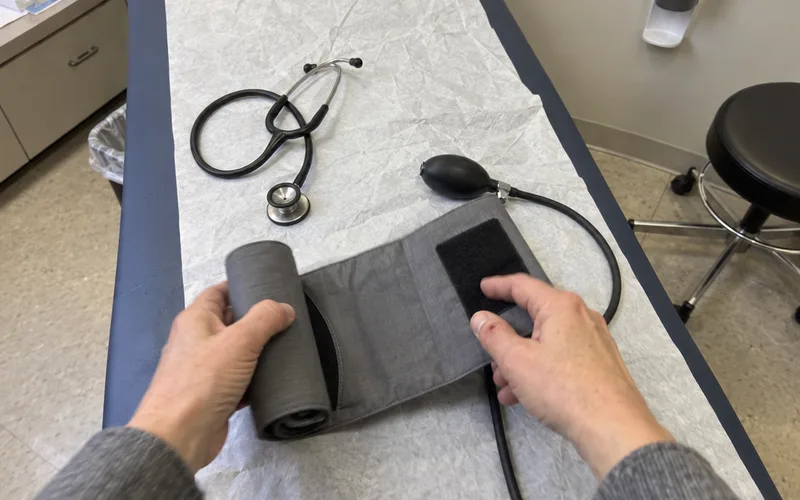
Use these medical Spanish phrases to tell the patient what to do next.
Best for: doctors, nurses and medical assistants.
- Respire profundo: Take a deep breath
- Abra la boca: Open your mouth
- Acuéstese en la camilla: Lie down on the exam table
- Voy a tomarle la temperatura: I’m going to take your temperature
- Voy a medirle la presión arterial: I’m going to check your blood pressure
Patients answer fast, so Spanish listening practice helps you catch the reply.
7. Tests and Treatments (Pruebas y Tratamientos)
These words explain what happens after the exam.
Best for: lab, imaging and pharmacy staff.
- el análisis de sangre / de orina: blood test / urinalysis
- la radiografía / la ecografía: X-ray / ultrasound
- el electrocardiograma: electrocardiogram
- la anestesia / la vacuna: anesthesia / vaccine
- el antibiótico / el analgésico / el laxante: antibiotic / analgesic / laxative
8. Emergencies and Injuries (Emergencias)
Hospitals label the emergency room urgencias or sala de emergencias.
Best for: EMTs, ER staff and travelers.
- la ambulancia: ambulance
- la hemorragia: bleeding
- la fractura / la quemadura: fracture / burn
- el infarto / el derrame cerebral: heart attack / stroke
- el paro cardíaco: cardiac arrest
- la intoxicación alimentaria: food poisoning
- el shock anafiláctico: anaphylactic shock
Learn llame a una ambulancia, call an ambulance, first.
9. Hospital Staff and Places (Personal y Lugares)
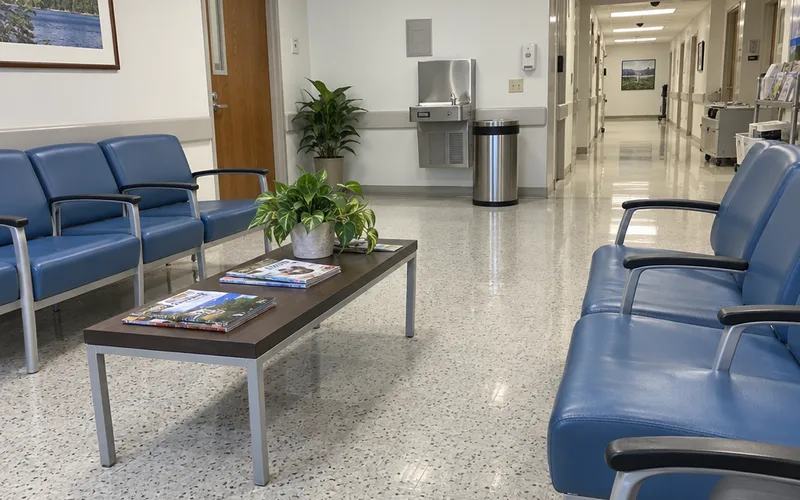
These words help a patient find the right person and room.
Best for: front desk staff and volunteers.
- el cirujano / el pediatra / el cardiólogo: surgeon / pediatrician / cardiologist
- el estetoscopio / la jeringa / la camilla: stethoscope / syringe / stretcher
- el quirófano: operating room
- la sala de espera: waiting room
Usted, Regional Words and False Friends
Medical Spanish uses usted, the formal “you,” with adult patients, and a few medical words change between Spain and Latin America. Switch to tú only if the patient does.
The regional pairs you’ll meet most:
| English | Spain | Latin America |
|---|---|---|
| adhesive bandage | la tirita | la curita |
| cast | la escayola | el yeso |
| bruise | el moratón | el moretón |
False friends are the bigger risk: embarazada means pregnant, not embarrassed. Estar constipado usually means having a cold, while constipation is estreñimiento.
How to Learn Medical Spanish Vocabulary
Learn medical Spanish vocabulary one group at a time with spaced-repetition flashcards, then say the questions out loud with a partner or tutor. If your everyday Spanish is shaky, build the basics of Spanish too.
These tips to remember Spanish words show how to space reviews, and Spanish Anki decks save you making cards. To quiz yourself on these Spanish medical terms, cover the Spanish in each list.
Lingua Linkup’s tutor directory lists Medical Spanish as a specialty and says it has 107 vetted tutors.
Rates on that page ran from $17 to $66 an hour. To study alone, compare a medical Spanish course, medical Spanish app or medical Spanish podcast.
Broader medical Spanish takes longer than vocabulary. Staff who want to interpret should check the proficiency tests for interpreters employers use.
Frequently Asked Questions
What are the 20 medical terms?
The 20 medical Spanish terms to learn first are dolor, duele, fiebre, tos, mareo, náuseas, vómitos, diarrea, falta de aire, cabeza, pecho, estómago, espalda, alergia, medicamento, embarazada, sangre, presión arterial, urgencias and ambulancia.
What are the medical terms in Spanish for nurses?
The medical Spanish terms nurses use most are intake and exam phrases such as voy a tomarle la temperatura.
Can medical Spanish replace a medical interpreter?
No, a medical Spanish word list can’t replace a qualified medical interpreter for consent, a new diagnosis or any talk where a mistake could cause harm.
Final Thoughts
Start with groups 2 and 3, the pain and symptom words, because every intake question builds on them.
This week, put them into flashcards and say each question out loud 10 times.