
Lifetime access to every Pimsleur language sold for $399 in early 2026.
That’s the deal one learner reported on the LingQ forum, adding that a single level of one course costs over $100.
So before you pay for Pimsleur’s audio courses, know what that money buys. This Pimsleur review covers how the method works, what learners report, the price and the refund fine print.
You’ll also see who should skip it, and what to use instead.
I rated Pimsleur on 4 things: how sound the method is, what learners report, what it costs and how fair its refund terms are. That’s an evidence review, not a lab test.
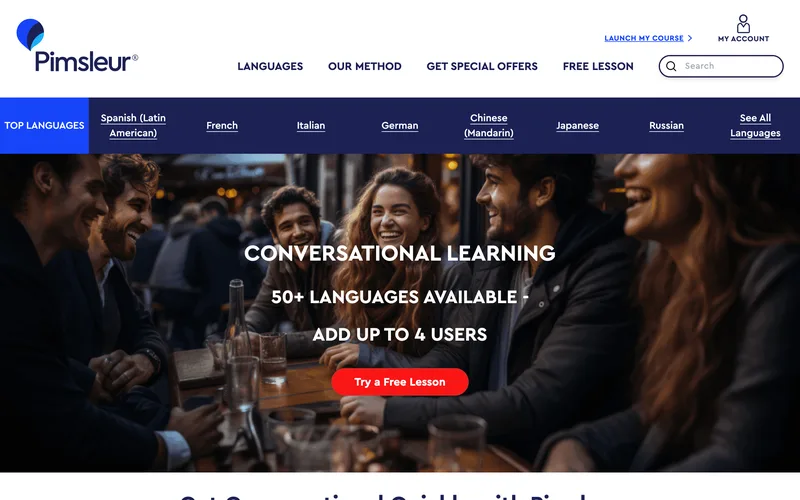
Pimsleur
An audio-first course from Simon & Schuster built on Paul Pimsleur's method: 30-minute spoken lessons that make you recall and say phrases out loud, aimed at getting beginners talking.
Pros
- Built to get you speaking from lesson 1
- Works hands-free while you drive or walk
- Strong on pronunciation and listening
Cons
- Little reading, writing or grammar
- Over $100 for a single level
- Refund guarantee excludes in-app purchases
Pimsleur Key Specifications
Pimsleur’s key specs come from its own sales page and refund policy, plus one learner’s report for the lifetime price:
| Spec | Detail |
|---|---|
| Publisher | Simon & Schuster |
| Method | Paul Pimsleur’s audio method |
| Lesson length | 30 minutes |
| Core lessons | Audio only, hands-free |
| Devices | Computer, tablet, iPhone, Android |
| Free trial | 7 days |
| Refund window | 30 days, Pimsleur.com purchases only |
| Lifetime deal | $399, all languages (learner report, 2026) |
The trial and the refund window are the 2 lines that should shape how you sign up, because they don’t work together.
How the Pimsleur Method Works
The Pimsleur Method teaches a language through 30-minute audio lessons. You hear 2 native speakers talk, then an English-speaking tutor prompts you to say each phrase out loud before you hear the answer.
Dr. Paul Pimsleur was a linguistics professor at Ohio State University and UCLA, Pimsleur’s sales page says. Simon & Schuster publishes the courses today.
His method rests on 2 ideas. Here’s how each one works:
Graduated Interval Recall
Graduated Interval Recall is Pimsleur’s name for spaced repetition, where a word comes back at longer and longer gaps. The company says words repeated at set intervals move from short-term memory into long-term memory.
In other words, you don’t drill a word over and over in one sitting. You hear it again right around the moment you’d start to forget it, which is the same timing idea behind spaced repetition apps.
The Anticipation Technique
Anticipation is the pause where the tutor asks how you’d say something, and you give a quick spoken translation before the native speaker does. Pimsleur calls these “mini-step challenges.”
Why does that matter? Pulling a phrase out of memory on a timer is much closer to real conversation than recognizing it on a screen.
The pause can feel short at first.
A LingQ forum learner who used Pimsleur for Turkish got too tense in the pause. So that learner started answering in the gap after the speaker instead.
That fix works fine, as long as you still say every answer out loud.
The method also skips classic study. Pimsleur’s page promises “no studying, no memorizing, no vocabulary, no complicated rules,” with grammar learned by listening the way you picked up your first language.
That’s a bold promise, and it explains the biggest trade-off: reading and writing get very little time.
Key Takeaway: Pimsleur trains you to speak on cue, not to read, write or analyze grammar.
Who Pimsleur Is Best For
Pimsleur is best for beginners who learn by ear and want to speak, especially if you have 30 free minutes a day in a car, on a walk or doing chores. Pimsleur’s own page says 75% of its customers learn on the go.
The core lessons are audio only, so you never have to look at a screen. That’s huge if your study time is your commute.
Here’s who tends to get the most from it:
- Commuters in a car or on a bus, and walkers who can’t look at a screen
- Travelers who need spoken phrases for a restaurant, a taxi or small talk
- Learners whose reading is ahead of their speaking
- Anyone facing a new sound system or word order, such as Russian or Persian
And here’s who should skip it:
- You mainly want to read, write or pass a written exam
- You want to choose the vocabulary you learn
- You need a free option
Learners whose reading is ahead of their speaking are the group top reviews leave out.
One LingQ forum learner returned to Pimsleur after 6 months and almost 10,000 known words of reading. That learner still couldn’t string a spoken sentence together.

For that learner, Pimsleur was the missing speaking practice, not a beginner tool.
Pimsleur’s page even pitches it for hard languages like Arabic and Korean. Its testimonials also name Spanish, French, Italian, German, Mandarin Chinese, Japanese and Hindi, and the method works the same way in each of those language courses.
Is Pimsleur Actually Effective?
Pimsleur is effective for basic speaking, listening and pronunciation, learners on the LingQ forum report, but most say it works best alongside other study, not as their only method.
Here’s what they credited it with:
- A Russian and Ukrainian learner said it really helped with “the flow” and pronunciation of both languages
- A Persian learner at upper A1 found it useful for word order and how questions are formed
- A Turkish learner called it “helpful to learn to speak”
Notice the pattern? Each win is about the sound and shape of spoken language, which is what audio trains and why Pimsleur’s page promises a “near-native accent.”
The same learners were blunt about its limits. The Russian learner said Pimsleur as the only method “wasn’t all that helpful,” and a live online tutor did most of the work.
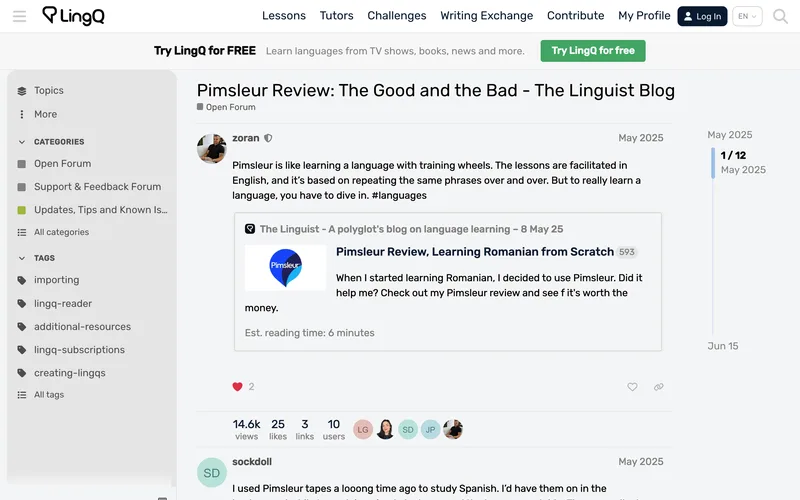
Then there’s the marketing. Pimsleur’s sales page promises you’ll speak “at an intermediate level in just 30 days.”
I’d treat that as a slogan, not a forecast. One Spanish learner on the forum wrote that on its own, Pimsleur wasn’t enough to hold a conversation.
Intermediate is a real, testable level, and the language proficiency levels it maps to ask for far more than 30 days of audio drills. So judge Pimsleur by what you can say after a month, not by the label.
Can You Get Fluent With Pimsleur?
Pimsleur alone is unlikely to make you fluent, because its scripted lessons stick to core conversation words, and fluency takes far more words and input.
Pimsleur’s own numbers show the gap. Its sales page says a basic conversation takes about 1,500 words and fluency about 5,000, and that its courses focus on that core vocabulary.
A member of LingQ’s own team put it this way on the forum: Pimsleur’s scripted dialogues are “a useful starting line, not a finish line.” LingQ sells a reading app, so weigh that view with care.
But the learners agree on the fix. One Spanish learner said Pimsleur works best “combined with something like LingQ and speaking practice through tutors on iTalki.”
So if fluency is your goal, plan for 3 parts:
- Pimsleur for speaking on cue and pronunciation
- Reading and listening to real content for vocabulary
- A tutor for live conversation, from an italki tutor marketplace or other language tutor apps
How long the whole trip takes depends on the language and your hours. You can work out your own fluency timeline from those 2 numbers.
What the Pimsleur App Adds
The Pimsleur app adds a Speak Easy dialogue, flashcards with words from each lesson and a few games, according to a LingQ forum learner who used it for Turkish in 2026.
Those extras give you a visual check on words you’ve only heard, which helps with Pimsleur’s biggest weakness: reading.
The app plays lessons on a computer, tablet, iPhone or Android phone, according to Pimsleur’s sales page. You can also break a 30-minute lesson into shorter sections across your day.
Note: Buying inside the app means paying Apple or Google, which changes your refund rights.
How Much Does Pimsleur Cost?
Pimsleur costs over $100 for one level of one course, and an all-languages lifetime deal ran $399 in January 2026, a LingQ forum learner reported. Pimsleur’s own site starts you with a 7-day free trial.
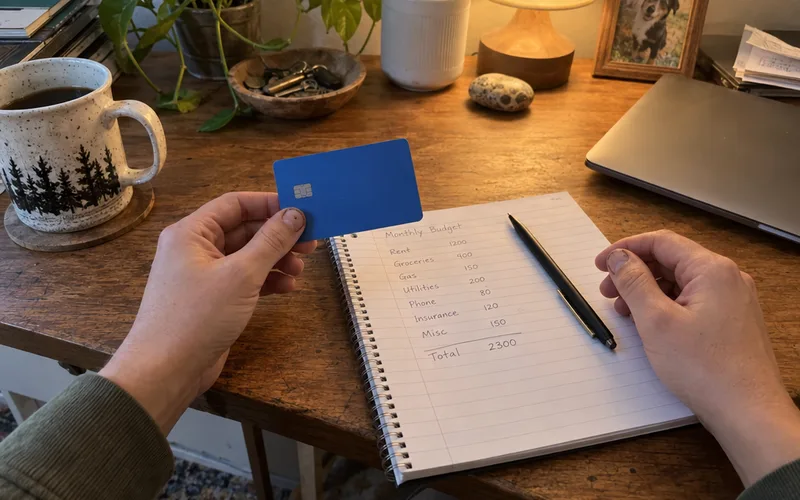
That same learner said the lifetime deal was $299 the year before. In other words, the price moves with promotions, so the number you see today may differ.
Here’s how to check it in 2 minutes:
- Go to pimsleur.com and pick your language.
- Open the plans page and note the monthly price, the lifetime price and whether a free trial is attached.
- Write down which plans include the trial, because that decides your refund rights.
Is a Pimsleur Lifetime Subscription Worth It?
A Pimsleur lifetime subscription is worth it if you’ll finish more than 3 levels or learn 2 or more languages, because the reported deal costs less than 4 single levels.
Here’s the math, as a hypothetical. Say you’d buy 4 levels of Spanish one at a time at the reported per-level price.
That’s over $400, so the lifetime deal already wins, and every extra language is a bonus.
But if you’ll stop after 1 or 2 levels, the lifetime plan costs you more than you need. And there’s a refund catch: Pimsleur’s guarantee excludes lifetime plans offered with a free trial of 7 days or more.
So test the method with the trial first, and only buy lifetime once you know you’ll keep going.
Pimsleur’s Refund Policy
Pimsleur’s official Satisfaction Guarantee gives you 30 days to get your money back, but only on plans bought from Pimsleur.com or its call center without a free trial of 7 days or more.
The biggest exclusion: anything bought through Apple or Google in-app purchases isn’t covered. Gift subscriptions don’t qualify either, and the policy applies to one purchase per customer.
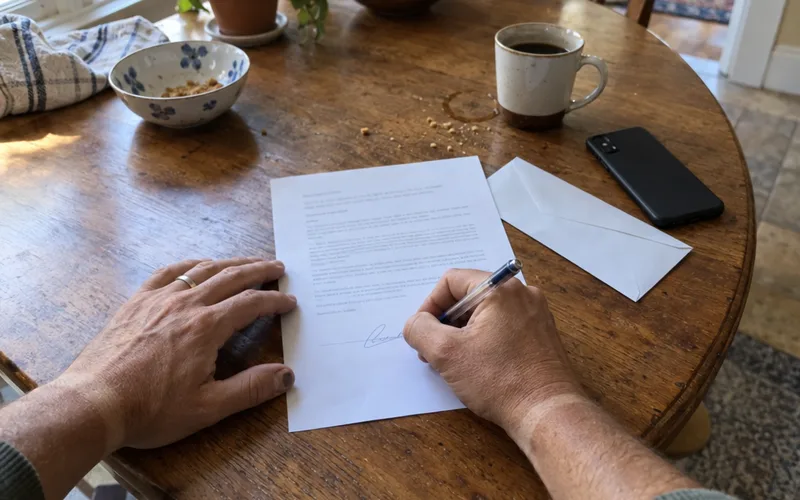
If you do qualify, the process takes 4 steps:
- Call 1-800-831-5497 (US/Canada) or email within 30 calendar days of your purchase.
- Have your original order number ready.
- Sign the sworn declaration Pimsleur sends you, and return it by email within 7 calendar days.
- Allow 4-6 weeks for the refund to reach your original payment method.
Here’s what to say: “Hi, I’m requesting a refund under the 30-Day Money-Back Guarantee. My order number is [your number], and I bought it on Pimsleur.com on [date].”
The declaration states that you’re the original buyer and kept no copies or recordings of the lessons. So budget a few days of back-and-forth.
The Biggest Downsides of Pimsleur
Pimsleur’s biggest downsides are thin reading and writing practice, a fixed vocabulary you can’t steer, and lessons some LingQ forum learners call boring.
The reading gap is the one most likely to hurt you.
A Persian learner on that forum found it “harder to retain new vocabulary” without seeing words written. That learner wouldn’t use Pimsleur for a language close to English.
The vocabulary problem comes next. The same learner called the lessons “rather inefficient and boring, with limited (and sometimes odd) vocabulary covered.”
Another forum member was harsher: “It’s way too boring,” they wrote, adding they’d rather use Rosetta Stone or even Duolingo.
The pace is the third catch. One Spanish learner warned that “Pimsleur is hard unless you intend to do the lesson several times,” which stretches your real cost per lesson.
And because the lessons run in English, one forum post compared Pimsleur to “learning a language with training wheels.” That’s comfortable on day 1 but less useful once you need full immersion.
How to Get the Most Out of Pimsleur
To get the most out of Pimsleur, do one 30-minute lesson a day out loud, repeat any lesson you stumble on, and add reading and a tutor.
Here’s the routine I’d follow, built from what forum learners say worked and from the basic steps to learn a new language:
- Start the trial with the language you’ll really use. You’ll know within a week whether the audio format suits you.
- Answer every prompt out loud. If the pause feels too short, answer in the gap after the speaker, as the Turkish learner did.
- Repeat a lesson until most answers come easily. Moving on too soon is how the early lessons start to feel impossible.
- Read the words after each lesson. Use the app’s flashcards so your ears and eyes learn the same words.
- Book a live conversation once a week. A teacher or tutor gives you the unscripted talk Pimsleur can’t.
Pro Tip: If your reading is already decent, flip the order. Use Pimsleur as a speaking bridge, the way the learner with almost 10,000 known words did.
For more ways to practice out loud, compare the apps built for speaking before you commit to a paid plan.
Pimsleur vs Duolingo, Babbel and Rosetta Stone
Pimsleur beats Duolingo, Babbel and Rosetta Stone for hands-free speaking practice. Those apps give you screen-based lessons with more reading, and Duolingo gives you a free way to start.
The choice comes down to where you’ll study. If it’s in a car or on a walk, Pimsleur fits; if it’s at a desk with your phone, a screen app usually fits better.
Here’s how the 3 main alternatives line up:
- Duolingo: a free, game-style app you tap through on a screen; see the full Duolingo comparison for more
- Babbel: a paid Babbel subscription with screen-based lessons; a head-to-head Babbel comparison weighs the two
- Rosetta Stone: Pimsleur’s own chart says its core lessons need a screen and give no English instructions; the Rosetta Stone matchup covers the rest
Keep in mind that Pimsleur’s chart is marketing.
If price is the deal-breaker, start with a free alternative to Pimsleur and see whether audio-first study suits you. And if you’re learning German, the Pimsleur German course gets its own close look.
Still comparing? The best language learning apps are easier to judge once you know whether you learn by ear or by eye.
Is Pimsleur Worth It? My Verdict
Pimsleur is worth it if your main goal is speaking and your free time comes with earbuds in.
It isn’t worth it as your only method, or if you mostly want to read and write.
Start the 7-day free trial this week, do lesson 1 out loud, and decide before the trial ends.
Frequently Asked Questions
Does the FBI use Pimsleur?
Pimsleur says the FBI, Homeland Security, the State Department, the Marine Corps and the Navy have relied on its courses, according to its own sales page. That’s the company’s claim, so read it as a sign of who has bought Pimsleur, not proof that it’ll work for you.
Is Pimsleur or Duolingo better?
Pimsleur is better than Duolingo for spoken practice you can do hands-free, since its core lessons are audio only, while Duolingo suits you if you want to start free on a screen. If you can only pick one, choose by where you’ll study: in the car, Pimsleur, and at a desk, Duolingo.
What is better, Rosetta Stone or Pimsleur?
Pimsleur is better than Rosetta Stone for learning to speak on the go, because Pimsleur’s own comparison chart says Rosetta Stone’s core lessons need a screen and give no English instructions. Rosetta Stone fits you better if you’d rather learn through pictures and full immersion.
Is Pimsleur easy to cancel?
Getting money back from Pimsleur takes some work: its 30-day guarantee needs a call or email within 30 days, a signed declaration and 4-6 weeks to process, and it excludes app store purchases. For help with a plan bought on Pimsleur.com, call (800) 831-5497, daily from 9am to 10pm ET.
Does Pimsleur have a free trial?
Yes, Pimsleur offers a 7-day free trial on its own site. A plan that comes with a trial of 7 days or longer doesn’t qualify for the 30-day money-back guarantee, so use the trial to make up your mind.
Is Pimsleur good for beginners?
Pimsleur is good for beginners who want to speak, because lessons start from zero and an English-speaking tutor guides every step. One LingQ forum learner found it hard to follow with little Spanish vocabulary, so expect to repeat the early lessons.