You want a real answer before you give Japanese your evenings for the next few years.
In this guide, I’ll show you how to turn “it depends” into a timeline you can plan around. Let’s dive right in.
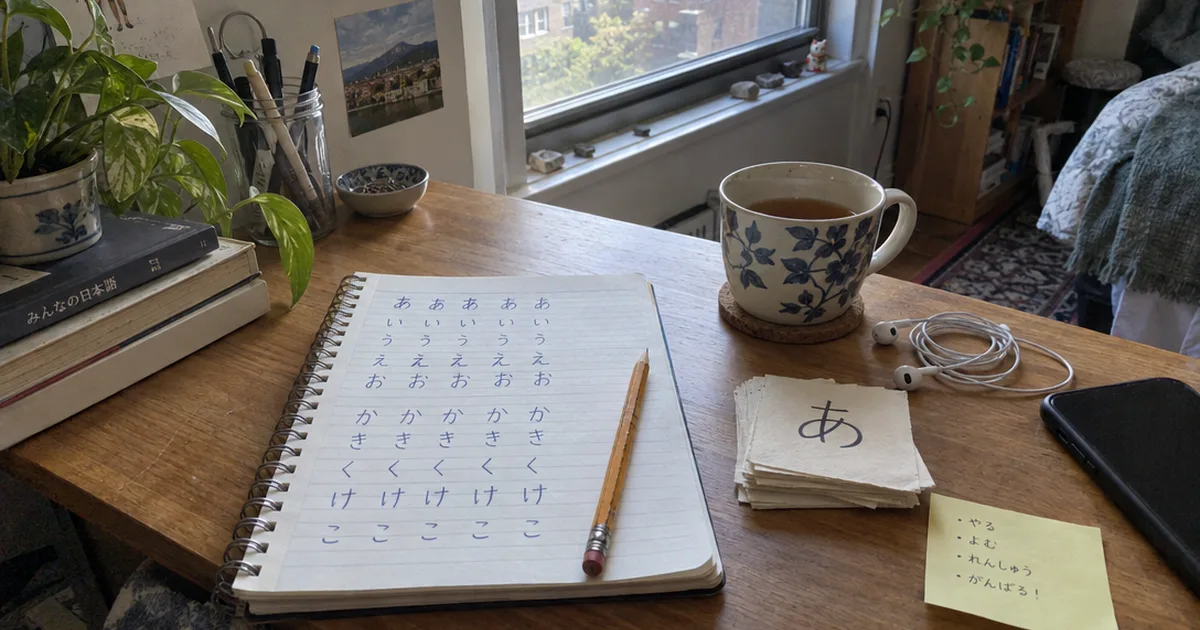
Want to read signs and menus? Start with kana.
Aiming at a test or conversation? Jump to the timeline math.
How Long Does It Take to Learn Japanese for Your Goal?
The Japanese language uses three writing systems: hiragana, katakana and kanji. So “learning Japanese” can mean very different finish lines.
Here they are, from fastest to slowest:
- Read kana: hiragana and katakana are phonetic scripts, so this is your quick win.
- Travel: greetings, numbers and ordering food.
- Anime and JLPT levels: everyday vocabulary plus some kanji.
- Conversation, manga and news: fast listening, Japanese grammar and lots of kanji.
Start today with five hiragana, using these kana study methods. For a trip, SakuraSpeak’s App Store listing says its role-play scenarios cover ordering coffee, asking for directions and ordering food.
Work Out Your Own Timeline in 5 Minutes
Here’s the deal: your timeline is your target hours divided by your weekly hours.
First, search “FSI language difficulty” for the class-hour estimate the Foreign Service Institute gives Japanese. It assumes full-time classroom study with teachers.
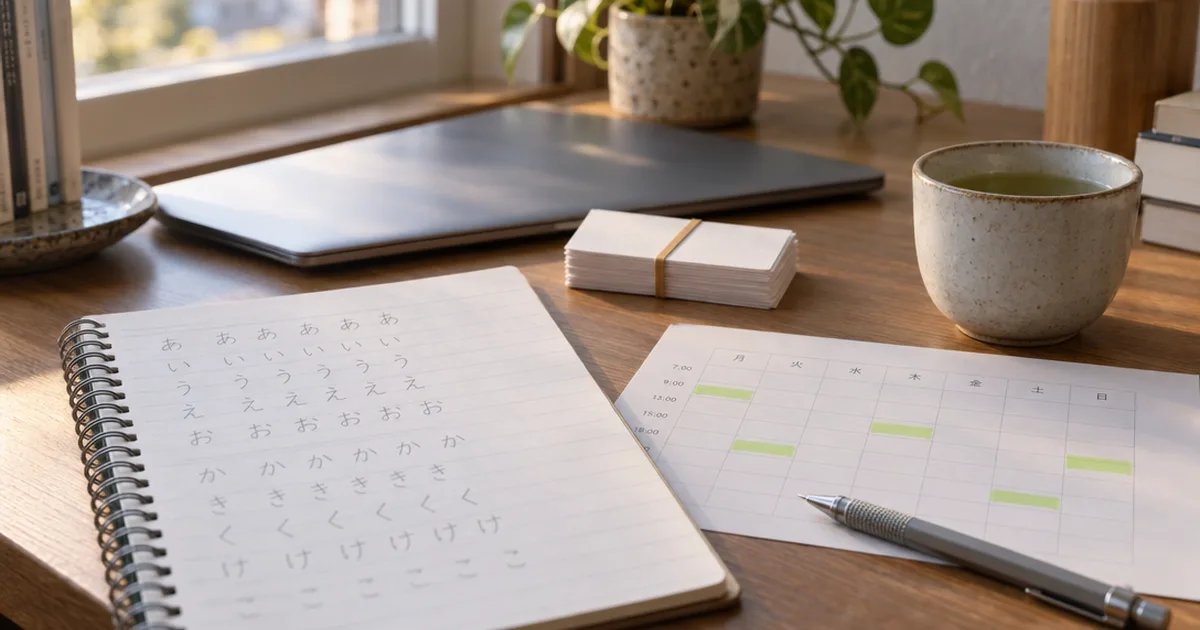
Next, count your weekly hours. One hour a day, five days a week, adds up to 260 hours a year.
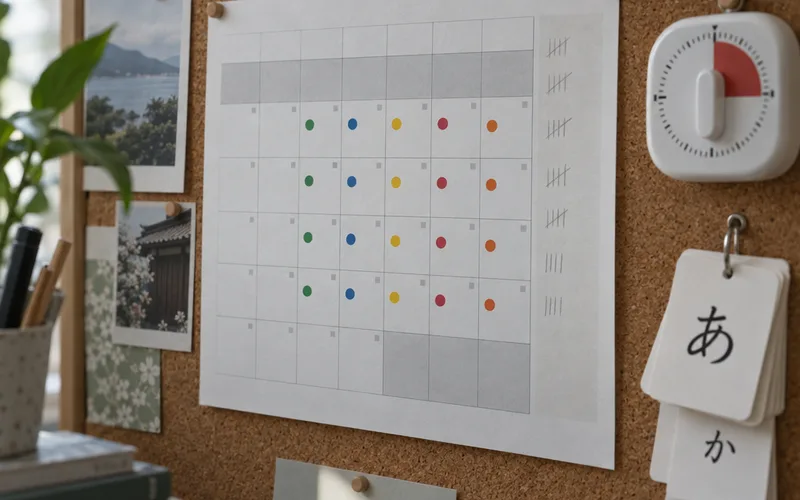
Then divide. If the result feels too long, add hours rather than shrinking your goal.
Note: SakuraSpeak’s listing pitches just 10 minutes a day. That’s about 61 hours a year, so treat it as a warm-up.
What Speeds You Up (and What Slows You Down)
Immersion speeds up learning. Conversation with native speakers and hours of listening drive language acquisition, so build your week around comprehensible input.
Kanji, the Chinese characters that carry meaning, slow most learners down. Review a few every day with spaced repetition, using these Anki settings for Japanese.
For speaking, SakuraSpeak’s listing says its AI gives instant feedback on pronunciation, grammar and fluency. A weekly tutor session does the same job.
Check Your Progress With the JLPT
The Japanese Language Proficiency Test (JLPT) runs from N5, the easiest, to N1. Take an N5 practice test this week and retest every few months.
If your score stalls, add reading with free graded readers.
Can You Learn Japanese With Duolingo Alone?
Duolingo builds a daily habit and basic vocabulary, but it’s light on listening and speaking. This Duolingo Japanese review shows the gaps, so pair the app with a show you enjoy.
Your Next Step
Most people need years for Japanese, but a planned year beats a vague one. Pick one goal, set your weekly hours and take a practice test this week.
The Japanese learning hub has more, and general language timelines show how Japanese compares. Which goal are you starting with?
Frequently Asked Questions
What is the 80/20 rule in Japanese?
It means focusing on the small set of words and grammar that show up most. Start with a frequency-sorted deck and add rare words later.
Is Japanese or Korean harder?
Korean is quicker to start reading because hangul is one small alphabet, while Japanese adds kanji. Pick the one whose shows you’ll actually watch.
What is the #1 hardest language?
There isn’t one, because difficulty depends on the languages you already speak. For English speakers, kanji is the hard part of Japanese.
Is 30 too late to learn Japanese?
No. Your weekly hours matter far more than your age, so set a weekly target you can keep.